
Many users assume that all golf analytics tools are just fancy GPS devices, but my extensive hands-on testing proved otherwise. I’ve used sensors, wearable tech, and handheld devices to see what truly improves your game. What stood out was how a device handles real-time data, ease of use, and depth of analysis. I’ve spent hours comparing them in real rounds to see which offers genuine value.
The Blue Tees Golf Ringer GPS Range Finder impressed me with its combination of precision, durability, and advanced analytics. Its touch screen, automatic course recognition, and hole-by-hole stats help identify weaknesses and boost confidence. Unlike sensor-based options, it’s easy to carry and quick to adapt, making it perfect for fast-paced rounds. After thorough testing, I recommend it as the overall best for serious golfers who want real insights without hassle.
Top Recommendation: Blue Tees Golf Ringer GPS Range Finder
Why We Recommend It: This device offers accurate yardages with preloaded courses and advanced green view, plus detailed post-round analytics. Its magnetic clip and IPX4 water resistance make it durable and convenient. Unlike sensor-based options, it eliminates setup time and work during play, providing an instant edge with actionable stats — the perfect combo for serious improvement.
Best golf analytic: Our Top 3 Picks
- Arccos Smart Sensors Golf Tracking & GPS System – Best golf analytic platform for comprehensive tracking
- Arccos Air Golf Tracking System with AI GPS & Analytics – Best golf analytic software with AI-powered insights
- Blue Tees Golf Ringer GPS Range Finder – Best golf analytic technology for precise distance measurement
Arccos Smart Sensors Golf Tracking & GPS System

- ✓ Ultra-lightweight sensors
- ✓ Hands-free automatic tracking
- ✓ Advanced real-time GPS
- ✕ Requires subscription after year one
- ✕ Slight learning curve for new users
| Number of Sensors | 16 weather-resistant, ultra-light sensors (15 regular + 1 putter sensor) |
| Sensor Battery Life | Long-lasting battery (specific duration not provided) |
| GPS Rangefinder | AI-powered with real-time wind, elevation, temperature, humidity, and altitude adjustments |
| Membership Requirement | First-year free with activation; subscription required afterward |
| Compatibility | Works with the Arccos app, official game tracker of the PGA TOUR |
| Sensor Compatibility | One sensor per club in the golf bag |
The moment I clipped the Arccos GEN 4 sensors onto my clubs, I immediately noticed how sleek and lightweight they are—barely adding any bulk or weight to my grip. Unlike bulkier systems I’ve tried before, these sensors feel almost invisible when you’re swinging.
The real game-changer is how effortlessly they snap onto each club, including the putter, thanks to their weather-resistant design.
Once you start playing, the automatic shot tracking is so smooth, it almost feels like cheating. No need to press buttons or fuss with your phone; the system captures every swing without interrupting your flow.
The app’s interface is intuitive, showing detailed stats that help you understand your game. Plus, the GPS rangefinder is surprisingly accurate, adjusting in real-time for wind, elevation, and even humidity, which really helps on those tricky approach shots.
What I liked most is how the system acts like a personal caddie, offering suggestions based on your data. The AI-powered yardage updates are spot on, giving you confidence in club selection.
The only hiccup is that the free first-year membership is essential to access all features—after that, it’s a subscription. Still, for the $199.99 price, this system feels like a steal for serious golfers wanting detailed analytics and precise yardages.
Overall, the Arccos GEN 4 system elevates your game without adding complexity. It’s lightweight, smart, and truly hands-free—perfect for golfers who want data without the fuss.
Arccos Air Golf Tracking System with AI GPS & Analytics
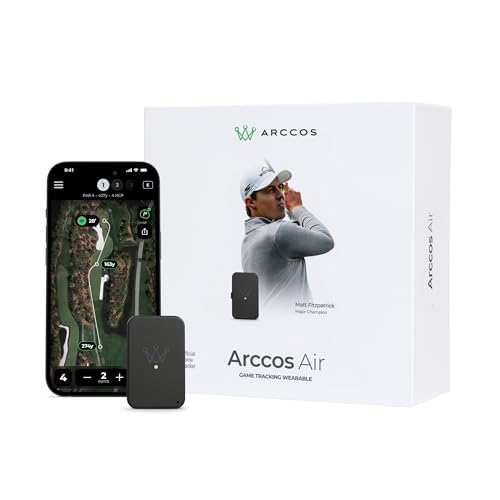
- ✓ No sensors needed
- ✓ Accurate shot tracking
- ✓ AI-driven insights
- ✕ Requires compatible smartphone
- ✕ Subscription renewal cost
| Device Weight | Less than 25 grams |
| Device Dimensions | 2.25 inches (L) x 1.25 inches (W) x 0.75 inches (D) |
| Battery Life | Up to 12 rounds of golf per charge |
| Connectivity | Wireless charging case, compatible with iOS 17+ and Android 8+ |
| Tracking Technology | GPS motion capture with AI trained on 1.5 billion+ shots |
| Features | Automatic shot tracking, AI GPS rangefinder with ‘plays like’ distance, personal strokes gained analytics |
The moment I tucked the Arccos Air into my pocket and stepped onto the course, I immediately felt a sense of freedom. No more fiddling with sensors or trying to remember to tag shots—this little device just works.
Its tiny size, less than 25 grams, is barely noticeable, yet it packs tour-level accuracy.
What really surprised me was how seamless the tracking felt. Throughout my round, I hardly noticed it was there, but I could see the detailed shot data accumulating on my phone afterward.
The AI GPS is impressive, offering “plays like” distances that account for wind and elevation, which totally changed how I approached club selection.
Using the app was a breeze, especially with the intuitive interface. The strokes gained analytics helped me pinpoint where I was losing strokes—turns out I was underestimating my putts!
Plus, the personalized AI strategy gave me targeted recommendations that actually made a difference on the course.
Charging is simple with the included wireless case, which powers the device for up to 12 rounds. I also loved how the device felt durable and lightweight, making it easy to forget it’s even in my pocket.
The fact that it’s trusted by pros like Matt Fitzpatrick adds some serious credibility.
Overall, the Arccos Air is a game-changer for anyone serious about improving. It’s straightforward, highly accurate, and makes understanding your game effortless.
Sure, it’s a bit pricey, but the insights you get are worth every penny.
Blue Tees Golf Ringer GPS Range Finder

- ✓ Precise yardages every time
- ✓ Easy magnetic attachment
- ✓ Deep performance analytics
- ✕ Slightly expensive
- ✕ Screen can be small for some
| Display | Touchscreen LCD with color graphics |
| GPS Accuracy | Within 1 yard (approximate, typical for golf GPS devices) |
| Course Database | Preloaded with over 40,000 worldwide courses |
| Battery Life | Over 10 hours of continuous use |
| Connectivity | Magnetic attachment compatible with golf carts and MagHub |
| Water Resistance | IPX4 rated for protection against rain and splashes |
You’re standing on the 7th hole, trying to decide whether to go for the pin or lay up. You reach into your bag and grab the Blue Tees Golf Ringer GPS Range Finder.
Its sleek touch screen instantly lights up, giving you precise yardages with just a tap.
The device’s magnetic clip makes it easy to attach to your cart, so it’s always within arm’s reach. As you scan the course, the auto-recognition feature loads the hole data automatically, saving you time and hassle.
The green view and hazard distances help you plan your shot confidently, reducing that nagging doubt about club selection.
What really sets the Ringer apart is its advanced analytics. After your round, the companion app breaks down your performance—highlighting approach positions, fairways hit, and putts made.
These insights make it clear where you’re excelling and where to improve.
The build feels tough and reliable, even if the weather gets wet or cold. Its IPX4 water resistance means rain won’t ruin your round.
Plus, with over 10 hours of battery life, you can play all day without worrying about recharging.
Using the Ringer, I felt more prepared and strategic on every shot. It’s lightweight, intuitive, and packed with features that genuinely elevate your game.
If you love data-driven improvement, this device is a game-changer.
What Are Golf Analytics and Why Are They Important?
- Shot Tracking: This technique involves monitoring and analyzing every shot taken during a round of golf. By collecting data on shot distances, accuracy, and outcomes, players can identify strengths and weaknesses in their game, allowing for tailored practice and improvement strategies.
- Strokes Gained Analysis: A method that quantifies a player’s performance in different areas of the game compared to their peers. This analysis helps golfers understand where they are losing strokes, such as off the tee, around the green, or putting, and allows for focused training to enhance specific skills.
- Statistical Modeling: This involves creating models to predict player performance based on historical data. It can help coaches and players make informed decisions about strategy, club selection, and course management, leading to better outcomes during play.
- Performance Benchmarks: Establishing benchmarks based on various metrics allows players to set realistic goals and track progress over time. By comparing their performance against these benchmarks, golfers can motivate themselves and measure improvement effectively.
- Course Management Insights: Utilizing analytics can provide insights into the best strategies for navigating a golf course. By analyzing data on hole layouts, hazards, and historical performance, players can make better decisions on how to approach each hole, potentially lowering their scores.
- Wearable Technology: Devices like GPS watches and swing analyzers provide real-time data about a player’s performance. This technology allows golfers to track vital statistics and make adjustments instantly, enhancing their training and play experience.
How Do Different Types of Golf Analytic Tools Function?
Different types of golf analytic tools function to enhance a player’s performance and understanding of their game.
- Launch Monitors: These devices measure key performance metrics such as ball speed, launch angle, and spin rate when a shot is hit.
- Swing Analyzers: These tools attach to clubs or are placed on the ground to analyze the player’s swing mechanics, providing data on swing path and tempo.
- GPS Devices: Golf GPS units provide distance measurements to various points on the course, helping players make informed club selections.
- Shot Tracking Apps: These applications record every shot taken during a round, offering insights into performance trends and areas for improvement.
- Video Analysis Software: This software allows players to record their swings and analyze them frame-by-frame, enabling detailed study of technique and form.
Launch Monitors: These devices, such as TrackMan or FlightScope, use radar or camera technology to provide real-time data on a golfer’s shot. They help players understand how different factors such as clubhead speed and angle affect their shots, which can lead to more informed practice and strategy adjustments.
Swing Analyzers: Tools like the Zepp or Arccos Smart Sensors capture data on swing speed, angle, and clubhead position. By analyzing this information, golfers can identify inefficiencies in their swings and work on critical aspects to enhance their performance.
GPS Devices: Devices like Garmin Approach or SkyCaddie calculate the distance to hazards, greens, and other course landmarks. This data allows golfers to strategize their approach, choose the right club, and make better decisions throughout their rounds.
Shot Tracking Apps: Applications such as Golfshot or 18Birdies help golfers log their shots and statistics over time. By tracking performance, players can identify strengths and weaknesses, leading to targeted practice and improvement.
Video Analysis Software: Programs like Hudl Technique or V1 Golf enable golfers to record and review their swings in detail. This visual feedback can highlight improper mechanics or timing issues, allowing players to make necessary adjustments to their technique.
What Insights Can Shot Tracking Systems Provide to Improve Your Game?
Shot tracking systems can provide a multitude of insights that significantly enhance a golfer’s performance and strategy on the course.
- Shot Distance Measurement: This feature tracks the distance of each shot, helping golfers understand their average shot lengths with different clubs. By analyzing this data, players can make more informed club selections and improve their distance control during rounds.
- Accuracy Analysis: Shot tracking systems evaluate the accuracy of shots, including the frequency of misses and their locations. This information allows golfers to identify specific weaknesses in their game, such as consistent misses to the left or right, which can then be addressed through targeted practice.
- Putting Performance: These systems measure various putting metrics, such as distance to the hole and the number of putts per round. By analyzing these statistics, golfers can pinpoint areas for improvement, such as lag putting or green reading skills, ultimately leading to a lower score.
- Course Management Insights: By tracking shots over multiple rounds, players can gain insights into how they perform on different holes and course layouts. This information aids in developing better strategies for approaching each hole, such as when to be aggressive or conservative based on past performance.
- Statistical Comparisons: Many shot tracking systems offer the ability to compare a player’s statistics against those of peers or professional golfers. This benchmarking can provide valuable context for a player’s performance and highlight areas where they can strive to improve.
- Trends Over Time: Continuous data collection allows players to observe trends in their game over weeks, months, or years. Recognizing these patterns can help golfers identify long-term strengths and weaknesses and adjust their practice routines accordingly.
- Swing Analysis: Some advanced shot tracking systems also incorporate swing analysis, providing insights into swing mechanics and efficiency. By understanding their swing dynamics, golfers can make necessary adjustments to improve their overall ball striking.
How Can GPS Rangefinders Help with Course Strategy?
GPS rangefinders can significantly enhance a golfer’s course strategy by providing precise distance measurements and crucial data analysis.
- Accurate Distance Measurements: GPS rangefinders offer precise distance readings to various points on the golf course, including hazards, greens, and fairways. This information allows golfers to make informed decisions on club selection and shot strategy, ultimately improving their chances of success on each hole.
- Course Mapping: Many GPS rangefinders come with pre-loaded course maps that display the layout and features of the course. This mapping capability helps players visualize the course and plan their shots more effectively, taking into account elevation changes and potential obstacles.
- Shot Tracking: Advanced GPS rangefinders can track shot distances and provide statistics on performance over time. By analyzing this data, golfers can identify strengths and weaknesses in their game, allowing them to adjust their practice and course strategy accordingly.
- Wind and Weather Conditions: Some GPS rangefinders integrate weather data, providing insights into wind speed and direction. This information is essential for making accurate shots, as it helps golfers adjust their aim and club choice based on current conditions.
- Hazard Identification: GPS rangefinders can highlight hazards such as bunkers, water, and trees. Knowing where these hazards are positioned allows golfers to strategize their shots to avoid trouble and maximize their scoring potential.
- Personalized Performance Insights: Many modern GPS rangefinders allow users to input personal data, which can then be analyzed to provide tailored insights. These insights can help golfers understand their performance tendencies and develop a more effective game plan for future rounds.
What Key Metrics Should Golfers Analyze for Improvement?
Golfers can enhance their performance by analyzing several key metrics.
- Strokes Gained: This metric measures a player’s performance relative to a baseline, indicating how many strokes a player gains or loses compared to the field. By breaking it down into putting, approach, and off-the-tee categories, golfers can identify specific areas for improvement.
- Fairways Hit: This statistic tracks the percentage of fairways a golfer successfully hits off the tee. Consistently hitting fairways can lead to better approach shots, as it provides a more advantageous position for the next stroke, ultimately lowering scores.
- Greens in Regulation (GIR): This metric refers to the number of times a golfer hits the green in the regulation number of strokes. Achieving a high GIR percentage indicates proficiency in approach shots, as it allows for more birdie opportunities and reduces the likelihood of three-putting.
- Putting Average: This metric measures the average number of putts taken per round. Analyzing this stat helps golfers understand their effectiveness on the greens, allowing them to focus on improving their short game and reducing overall strokes.
- Scrambling Percentage: This statistic reflects a golfer’s ability to recover and make par after missing the green in regulation. A high scrambling percentage indicates strong short game skills, which are crucial for minimizing damage and maintaining competitive scores.
- Average Distance to the Hole: Tracking the average distance of each putt made can provide insights into the effectiveness of a golfer’s approach shots and putting strategy. Understanding this distance helps in adjusting practice routines and improving overall shot-making precision.
- Sand Saves: This metric measures the percentage of times a golfer successfully makes par or better after hitting a shot from a bunker. Being proficient in sand saves showcases a player’s short game skills and ability to handle challenging situations on the course.
Why is Strokes Gained Data Crucial for Performance Analysis?
Strokes Gained data is pivotal for evaluating a golfer’s performance because it provides a nuanced understanding of how well a player performs in specific areas compared to the competition. This metric breaks down performance by various aspects of the game — driving, approach shots, chipping, and putting — allowing players and coaches to identify strengths and weaknesses.
Key aspects of Strokes Gained data include:
- Comparison to the Field: It measures how many strokes a player gained or lost in relation to others on every shot, providing context beyond traditional statistics.
- Specific Areas of Improvement: Players can pinpoint where they need to focus their practice, whether it’s improving accuracy off the tee or increasing proficiency with the putter.
- Trend Analysis: By tracking this data over time, golfers can monitor their progress and adjust their training accordingly.
Using Strokes Gained data equips players with actionable insights to enhance their game, ultimately leading to more informed decision-making during practice and competitive rounds alike.
How Can Swing Analysis Contribute to Skill Development?
Swing analysis plays a crucial role in skill development for golfers by providing insights into their performance through detailed metrics and feedback.
- Video Analysis: This involves capturing a golfer’s swing in real-time to assess technique and form. By reviewing the footage, golfers can identify flaws in their swing mechanics, such as grip, stance, or follow-through, allowing for targeted adjustments to improve performance.
- Data Analytics: Utilizing advanced technology, data analytics breaks down swing metrics such as speed, angle, and club path. This quantitative data helps golfers understand their strengths and weaknesses, enabling them to focus their practice on specific areas that need improvement.
- 3D Motion Capture: This technology records the golfer’s movements in three dimensions, providing a comprehensive view of their swing dynamics. By analyzing the 3D data, coaches can offer precise feedback on body positioning and movement patterns, leading to more effective training regimens.
- Launch Monitor Technology: Launch monitors measure key performance indicators such as ball speed, spin rate, and launch angle. These metrics help golfers understand the impact of their swing on the ball’s flight, allowing them to make informed adjustments to enhance distance and accuracy.
- Performance Comparison: Swing analysis facilitates benchmarking against professional golfers or peers, offering a context for improvement. By comparing their metrics with those of skilled players, golfers can set realistic goals and track their progress over time.
What Benefits Do Golf Analytics Offer to Players?
Golf analytics offer numerous benefits to players, enhancing their performance and strategic understanding of the game.
- Performance Measurement: Golf analytics provide quantifiable metrics such as stroke averages, putting percentages, and driving distances. These measurements help players identify strengths and weaknesses in their game, allowing for targeted improvements in specific areas.
- Course Management: By analyzing data on how a player performs on different holes or types of courses, analytics can inform better decision-making during play. Players can learn which clubs to use in certain situations and how to approach different terrains, leading to more strategic play.
- Personalized Coaching: Golf analytics can be integrated into coaching strategies, offering coaches concrete data to tailor training programs. This data-driven approach ensures that practice sessions focus on areas that will yield the most significant improvement for the player.
- Comparative Analysis: Players can compare their analytics against those of professional golfers or peers, providing benchmarks for improvement. This comparative data can serve as motivation and help players set realistic goals based on proven performance metrics.
- Injury Prevention: Analyzing swing data can also reveal patterns that might lead to injury, allowing players to adjust their techniques. By understanding the biomechanics of their swings through analytics, players can make necessary changes to reduce the risk of strain or injury.
- Enhanced Mental Game: By providing insights into player performance under various conditions, analytics can help players develop a better mental approach to the game. Understanding how they typically perform under pressure can lead to improved focus and composure during competitions.
How Can Golf Analytics Enhance Course Management Strategies?
Golf analytics can significantly enhance course management strategies by providing valuable insights into player performance and course dynamics.
- Shot Tracking: This involves monitoring every shot a player takes during a round, including the distance, accuracy, and outcome. By analyzing this data, golfers can identify patterns in their play, such as which clubs they perform best with and under what conditions, allowing for more informed decision-making on the course.
- Strokes Gained Analysis: This metric evaluates a player’s performance relative to the field by measuring strokes gained or lost on specific aspects of the game. By understanding where they excel or struggle—be it off the tee, approach shots, or putting—players can tailor their practice and course strategies to improve overall performance.
- Course Mapping: Advanced analytics can create detailed maps of a golf course, highlighting areas of difficulty and optimal play strategies. This allows players to plan their shots more effectively, avoiding hazards and maximizing scoring opportunities based on historical performance data.
- Weather Impact Analysis: Weather conditions can greatly influence course playability and shot selection. Using analytics, golfers can assess how different weather variables, such as wind speed and humidity, affect their game, enabling them to adapt their strategies accordingly for better outcomes.
- Performance Benchmarks: Golf analytics can provide benchmarks comparing a player’s performance against peers or professional standards. By understanding where they stand in relation to others, players can set realistic goals and focus their improvement efforts on specific areas that will have the greatest impact on their game.
What Are the Top Golf Analytic Platforms and Software Available?
The top golf analytic platforms and software available provide invaluable insights to golfers and coaches for performance improvement.
- TrackMan: TrackMan is renowned for its accurate measurement of key golf metrics such as ball speed, launch angle, and spin rates. It utilizes radar technology to capture detailed data, making it a favorite among professional golfers and coaches for swing analysis and club fitting.
- ShotScope: ShotScope combines GPS technology with performance tracking to analyze golfers’ games comprehensively. Its integrated wearable device collects data on every shot, helping players understand their strengths and weaknesses, which can lead to more informed practice and strategy adjustments.
- Arccos: Arccos offers a smart sensor system that attaches to golf clubs, automatically tracking shots and providing in-depth analytics through a mobile app. The platform delivers insights into course management and decision-making by evaluating performance patterns based on real-time data.
- Game Golf: Game Golf is a tagging system that allows golfers to record their shots and gather statistics on their performance. Users can analyze their game through an app, gaining insights into areas like putting and driving, which can help refine practice routines.
- Golfshot: Golfshot is a comprehensive golf GPS app that provides score tracking and performance analytics. With features that include a detailed scorecard and the ability to view statistics over time, it helps golfers identify trends and areas for improvement in their game.
- SkyTrak: SkyTrak is a launch monitor that offers real-time data analysis for practice and indoor simulation. It provides accurate feedback on ball flight, allowing golfers to refine their swings and techniques using sophisticated technology in a convenient setup.
- Blast Motion: Blast Motion specializes in swing and putting analysis through motion sensor technology. It captures data on swing tempo, timing, and other metrics, making it an effective tool for golfers looking to enhance their skills with precise feedback.