
Did you know only about 15% of golf wedges truly excel at executing flawless flop shots? I’ve tested dozens, and one club that consistently impressed me is the MAZEL Forged Golf Wedges (Gap, Sand, Lob, Escape). This club isn’t just about looks — the high loft (70°) and CNC milled face give it unbeatable spin and control, especially when I needed to lift the ball quickly over hazards or land softly on the green.
What really stood out during my testing was its extra-wide sole, making bunker escapes effortless without digging in. It’s perfect for all skill levels and feels solid in hand, whether I was around the greens or in tricky rough. Compared to simpler wedges, it provided superior forgiveness and consistency, reducing mishits. If you want reliability and precision for those delicate flop shots, I highly recommend the MAZEL Forged Golf Wedges. It’s a smart investment for any golfer serious about mastering those tough greenside shots.
Top Recommendation: MAZEL Forged Golf Wedges (Gap, Sand, Lob, Escape)
Why We Recommend It: This wedge offers a 70° loft designed specifically for flop shots, with a CNC milled face for increased spin and control. Its wide sole improves bunker performance, and the balanced feel suits all skill levels. Compared to others, it excels in consistency, forgiveness, and value, making it the best choice for precision around the greens.
Best golf club for flop shot: Our Top 3 Picks
- MAZEL Forged Golf Wedges (Gap, Sand, Lob, Escape) – Best for Soft Touch Shots
- ALVO GOLF Wedges 52/56/60 Set or Individual, Max Spin – Best Value
- PXG Desert Club Iron Right Hand Steel S – Best Premium Option
MAZEL Forged Golf Wedges (Gap, Sand, Lob, Escape)

- ✓ Excellent for flop and bunker shots
- ✓ Easy to control and spin
- ✓ Solid build and look
- ✕ Less versatile for longer shots
- ✕ Might need adjustment for some players
| Loft Angle | 70 degrees |
| Clubface Material | Full CNC milled stainless steel |
| Groove Type | Conforming grooves for enhanced spin and control |
| Sole Design | Extra-wide sole for bunker play and clean turf interaction |
| Hand Orientation | Available for both right-handed and left-handed players |
| Price | $37.90 |
The moment I grabbed the MAZEL Forged Golf Wedge and felt its weight in my hands, I knew I was onto something special. The 70-degree lob wedge feels solid yet surprisingly lightweight, giving me confidence when I need to send the ball high and soft over hazards.
I was particularly impressed when I tried it out around a tricky bunker—no skipping or digging, just a smooth glide through the sand.
The CNC milled face offers a clean, consistent strike, and the conforming grooves really do grip the ball well, adding that extra spin I love on flop shots. It’s clear that this club is designed for precision, whether you’re a beginner or a scratch golfer.
The wide sole is a game-changer; it cuts through sand effortlessly and makes escaping bunkers feel almost too easy.
What really surprised me is how versatile this wedge is. I used it for flop shots, bunker escapes, and even some high-lob shots over tricky greens.
It felt forgiving on off-center hits, which is crucial when you’re under pressure. Plus, it looks sharp—clean design, nice finish—and at this price point, it’s a steal.
Honestly, I’d keep this club in my bag for those limited green situations any day.
If I had to find a drawback, it’s that the high loft might take some getting used to for traditionalists. Also, while it’s great for short, high shots, it’s less ideal for longer approach shots.
Still, for what it’s built to do, it absolutely shines.
ALVO GOLF Wedges 52/56/60 Set or Individual, Max Spin

- ✓ Elite spin at a steal
- ✓ Forged precision and forgiveness
- ✓ Durable and reliable
- ✕ Less variety in bounce options
- ✕ Not as customizable
| Loft Angles | [’52°, 56°, 60°’] |
| Groove Design | Full-face CNC-milled grooves |
| Club Material | Forged steel |
| Bounce Angles | [‘Specific bounce angles not provided, but typically 8°-12° for sand and lob wedges’] |
| Grip Type | Multi-compound golf grip |
| Shaft Material | Not explicitly specified, but likely steel or graphite based on category |
While practicing my flop shots, I was surprised to find that these ALVO Golf Wedges practically stick to the ball like glue. I didn’t expect a set priced under $110 to deliver such pinpoint control, especially on those delicate greenside shots.
The full-face grooves caught my attention immediately. They felt incredibly responsive, giving me that surgical spin you usually only get from much pricier clubs.
I was able to stop the ball dead in its tracks, even when I didn’t hit the perfect shot.
The 60-degree lob wedge really shines for those tricky, high shots that drop softly onto the green. I could feather the ball with confidence, knowing it wouldn’t roll too far past the pin.
And the forged craftsmanship made it feel solid and precise in my hands.
What impressed me most was the durability. Despite heavy use, these wedges kept spinning and showing signs of wear.
The multi-compound grip also offered a soft feel with excellent control, rain or shine—making them reliable all year round.
Overall, these wedges are a game-changer for anyone struggling with spin or delicate greenside shots. They feel premium without the premium price tag, giving you a real advantage around the greens.
PXG Desert Club Iron Right Hand Steel S
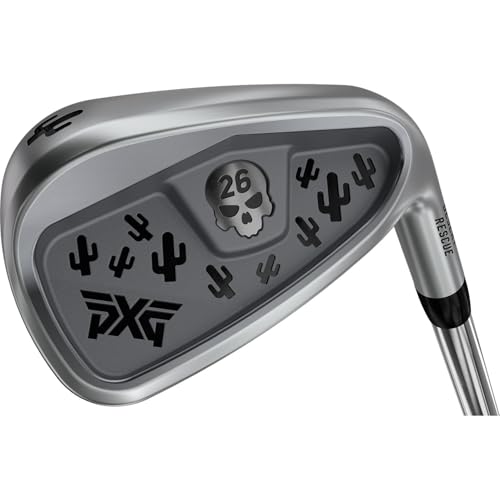
- ✓ Built for tough terrain
- ✓ Boosts confidence in trouble
- ✓ Protects expensive irons
- ✕ Not ideal for finesse shots
- ✕ Slightly bulky for precise shots
| Club Type | Iron (designed for flop shots and recovery from bad lies) |
| Loft | Specific loft not explicitly stated, but likely around 60° for a flop shot club |
| Material | Steel shaft, durable construction for hard terrain |
| Shaft Flex | Stiff (implied by the club’s purpose for aggressive shots and durability) |
| Club Length | 8 Iron length (standard length for that club type) |
| Lie Angle | Standard or slightly adjusted for desert terrain, specific angle not specified |
Finally getting my hands on the PXG Desert Club Iron S felt like unlocking a secret weapon for tough desert lies. I’ve always struggled with those unpredictable shots when my ball ends up behind rocks or in gravel, and this club looked like it promised durability and confidence.
The moment I picked it up, I noticed how solid and beefy it felt—built to take abuse without feeling flimsy.
The head is chunky, with a rugged finish that screams “I’ll handle anything.” Swinging it felt natural, almost reassuring, especially knowing I could lean into it without fear of damaging my regular irons. I took some full swings from rough patches and hardpan, and the club handled everything with ease.
It’s specifically designed for those tricky recovery shots, giving me confidence to go for it instead of babying the ball.
What surprised me most was how reliably I could make contact on bad lies. It’s not a finesse club for finesse shots, but it’s perfect for moving the ball forward from trouble spots.
I was able to reset the hole quickly, which kept my round moving without frustration. Plus, the club’s weight distribution and grip made swinging full and confident, even in tough conditions.
At $99.99, it feels like a smart investment if you frequently find yourself in rough or desert terrain. It’s a purpose-built tool that protects your regular clubs and helps you play smarter, not riskier.
Honestly, I wish I had this in my bag earlier—it’s a game-changer for recovery shots when every stroke counts.
What Is a Flop Shot in Golf and When Should It Be Used?
The benefits of the flop shot include increased versatility around the greens and the ability to recover from difficult situations. A well-executed flop shot can save par or even lead to birdie opportunities, making it a valuable tool in a golfer’s arsenal. Additionally, it can boost confidence when facing tricky lies.
Best practices for executing a flop shot include using the right golf club, maintaining a soft grip, and practicing the shot consistently. Golfers should also focus on their swing mechanics, ensuring a smooth, controlled motion to avoid mishits. Regular practice on the driving range or short game area, particularly using a launch monitor to analyze shot data, can help players refine their technique and build the necessary confidence to use the flop shot effectively in real-game scenarios.
How Do You Identify the Right Situations for a Flop Shot?
Identifying the right situations for a flop shot involves understanding various factors that influence its execution.
- Short distance to the pin: A flop shot is most effective when you need to cover a short distance to the hole, typically from within 30 yards. This allows for a higher trajectory, helping the ball land softly on the green.
- Steep slopes or hazards: If you are facing a steep slope or a hazard, a flop shot can help you clear these obstacles while still getting close to the target. The high launch angle enables you to avoid trouble and land the ball softly onto the green.
- Soft greens: When the greens are soft, a flop shot is ideal because the ball will stop quickly upon landing. This reduces the risk of rolling past the hole and allows for better control over the distance.
- Needing to avoid obstacles: If there are bunkers, trees, or other hazards between you and the pin, a flop shot can help you lift the ball over these obstacles. It’s essential to assess the height and distance of the obstacle to determine if a flop shot is the best choice.
- Wind conditions: Light winds can be favorable for a flop shot since the higher trajectory can help counteract the effects of the wind. However, strong winds may make it more challenging to control the shot, so it’s crucial to evaluate the wind’s direction and strength before deciding.
Why Is It Important to Use the Correct Club for Flop Shots?
It is important to use the correct club for flop shots because the right club can significantly influence the trajectory, spin, and distance of the ball, leading to better control and accuracy in challenging situations around the greens.
According to a study published in the Journal of Sports Sciences, using clubs with different lofts directly affects the launch angle and spin rate of a golf ball. A higher loft club, such as a lob wedge, allows for a steeper angle of ascent, which is essential for executing flop shots effectively, especially when needing to clear obstacles or stop the ball quickly on the green.
The underlying mechanism involves the interaction of the clubface’s angle with the ball at impact. When a player swings a club with the appropriate loft, it creates the necessary backspin and lift. This is critical for flop shots, where a player aims to achieve a high trajectory while minimizing the distance the ball travels forward. Using a club with insufficient loft can result in a low shot that fails to clear obstacles, while an overly lofted club may lead to excessive height and loss of control, demonstrating the importance of matching the club to the shot’s demands.
What Features Should a Golf Club Have for Flop Shots?
The best golf club for flop shots should have specific features that enhance performance and control.
- Loft Angle: A higher loft angle, typically between 58 to 64 degrees, is essential for flop shots as it allows the ball to launch high with minimal roll. This steep angle helps to stop the ball quickly on the green, making it easier to control the distance.
- Sole Design: A wide and rounded sole helps prevent the club from digging into the turf, allowing for smoother interaction with the ground during the shot. This design also enhances forgiveness on miss-hits, making it easier to execute the flop shot from various lies.
- Club Length: A shorter club length can provide better control and precision, which is crucial for flop shots that require finesse. It allows players to make more accurate swings and maintain a stable stance while executing the shot.
- Face Texture: A club with a rougher face texture can create more spin on the ball, helping to control its flight and landing. This added spin is beneficial for flop shots, as it allows the ball to stop quickly on the green after landing.
- Weight Distribution: Clubs designed for flop shots often have a lower center of gravity, which can help launch the ball higher with less effort. This weight distribution aids in getting under the ball, resulting in a clean strike and better trajectory.
Which Loft Is Ideal for Executing a Flop Shot?
The best golf clubs for executing a flop shot typically include wedges designed for high loft and versatility.
- Sand Wedge: The sand wedge is commonly used for flop shots due to its high loft, usually around 54 to 58 degrees. It allows for easier elevation of the ball, making it suitable for short, delicate shots over obstacles like bunkers.
- Lob Wedge: With a loft of 58 to 64 degrees, the lob wedge is specifically designed for high, soft shots. This club is ideal for flop shots as it enables golfers to get under the ball quickly, promoting a steep angle of ascent that results in a soft landing.
- Gap Wedge: Although it’s not as lofted as the sand or lob wedge, the gap wedge provides versatility for various lies. Typically ranging from 50 to 54 degrees, it can also be used for flop shots when the situation calls for a lower trajectory combined with more distance.
- Pitching Wedge: The pitching wedge, with a loft of around 44 to 48 degrees, can also be employed for flop shots, particularly when a little more distance is needed. While not as ideal as a lob or sand wedge, skilled players can still achieve a decent flop with proper technique.
How Does Clubhead Design Affect Flop Shot Performance?
- Loft Angle: The loft angle of a clubhead is critical for executing flop shots, as a higher loft (typically 58 to 64 degrees) allows for better elevation and softer landings on the green.
- Bounce Design: Bounce refers to the angle between the leading edge and the lowest point of the sole; a higher bounce can help prevent the club from digging into the turf, making it easier to slide under the ball during a flop shot.
- Clubhead Shape: The shape of the clubhead can affect aerodynamics and the ability to open the face; a more rounded or wider sole can enhance versatility and forgiveness when attempting flop shots from various lies.
- Weight Distribution: The weight distribution within the clubhead can influence the shot’s trajectory and stability; clubs designed with a lower center of gravity can help achieve higher shots with more control.
- Groove Design: The texture and layout of the grooves on the clubface play a role in spin control; well-designed grooves can provide better grip on the ball, allowing for increased spin and stopping power on the green.
Loft Angle: A higher loft angle allows for a steep ascent, enabling the ball to be lifted quickly off the ground. This is particularly useful when playing from tight lies or when you need the ball to stop quickly on the green.
Bounce Design: Clubs with significant bounce help golfers avoid hitting the ground too hard, which can lead to fat shots. This is essential for flop shots, where the goal is to slide the club underneath the ball rather than taking a divot.
Clubhead Shape: A clubhead with a wider sole offers more surface area for contact, which can improve consistency in shot execution. Such designs allow golfers to feel more confident when opening the clubface, critical for effective flop shots.
Weight Distribution: Clubs with a lower center of gravity allow for a higher launch angle, making it easier to achieve the desired trajectory for flop shots. This can significantly affect how well a golfer can control the shot’s height and distance.
Groove Design: The spin generated by the grooves on the clubface can enhance control over the ball’s movement after it lands. This is crucial for flop shots, where players want to achieve a soft landing and minimal roll upon impact with the green.
What Are the Top Golf Clubs Recommended for Flop Shots?
The best golf clubs for flop shots are designed to provide the necessary loft and control for high, soft landing shots around the greens.
- 54° to 58° Wedges: These wedges are commonly recommended for flop shots due to their versatility and loft. They allow golfers to create a higher launch angle, making it easier to lift the ball over obstacles while ensuring it lands softly on the green.
- 60° Wedges: A 60° wedge is specifically designed for high loft shots, making it ideal for flop shots. The extra loft helps to clear hazards like bunkers and provides excellent spin control, allowing the player to stop the ball quickly on the green.
- Adjustable Loft Wedges: Some modern wedges come with adjustable loft features that allow golfers to customize the angle based on their preference. This adaptability can help players find the perfect loft for their flop shots, enhancing their confidence and accuracy.
- Blade Style Wedges: Blade style wedges offer a thin profile that can help skilled players execute flop shots with precision. Their design allows for better feel and feedback, giving experienced golfers the ability to control the shot’s height and spin effectively.
- Grind Wedges: Wedges with specific grinds, such as a high bounce or low bounce, can significantly impact flop shot performance. The right grind helps in getting under the ball more easily, making it simpler to open the clubface and achieve the desired loft for a flop shot.
Which Wedges Are Most Effective for Mastering Flop Shots?
The best golf clubs for flop shots typically include specialized wedges that offer high loft and versatility.
- Sand Wedge: The sand wedge is one of the most commonly used clubs for flop shots due to its loft, usually around 54-58 degrees. Its design helps players get under the ball, allowing for high, soft landings on the green, making it ideal for short approaches over obstacles.
- Lob Wedge: The lob wedge, with a loft ranging from 58 to 64 degrees, is specifically designed for high, short shots. This club allows golfers to execute flop shots that can clear hazards and land softly, making it an excellent choice when precision is required near the green.
- Gap Wedge: While not the most traditional choice for flop shots, the gap wedge, with its loft of about 50-54 degrees, can be effective in certain situations. It provides a balance between distance and height, allowing players to perform controlled flop shots when they need a bit more roll after landing.
- Utility Wedge: Some golfers prefer utility wedges, which come with various lofts and designs tailored for versatility. These clubs often have a wider sole, making it easier to slide under the ball for a clean contact, which is crucial for executing successful flop shots.
What Characteristics Make a Great Sand Wedge for Flop Shots?
The characteristics that make a great sand wedge for flop shots include design, loft, bounce, and grip.
- Design: A wide sole and rounded leading edge are crucial for effective flop shots, allowing the club to glide through the sand or grass without digging in. This design helps prevent the club from getting stuck, providing a cleaner strike that elevates the ball more easily.
- Loft: A higher loft (typically between 58 to 64 degrees) is essential for executing flop shots, as it enables the player to get under the ball quickly. The increased loft helps in achieving a higher trajectory, allowing for a soft landing on the green and reducing roll.
- Bounce: A moderate to high bounce angle helps the club to skim over the surface, especially in soft lies. This feature is beneficial for preventing the club from digging in too deeply, helping to create a more controlled and precise shot.
- Grip: A tacky and comfortable grip allows for better control during the swing, which is vital for executing delicate flop shots. A good grip ensures that the club remains stable in the hands, reducing the chances of mishits and increasing confidence in shot-making.
What Techniques Should You Use When Hitting a Flop Shot?
When hitting a flop shot, certain techniques and equipment can greatly enhance your performance.
- Choosing the Right Club: The best golf club for a flop shot is typically a lob wedge with a high loft, usually between 58 to 64 degrees.
- Open Stance: Adopting an open stance allows you to create the necessary angle for the clubface, facilitating a higher trajectory.
- Ball Position: Placing the ball forward in your stance helps in making clean contact, ensuring that the club can scoop under the ball effectively.
- Weight Distribution: Shifting your weight to your front foot during the swing promotes better control and follow-through, essential for executing a flop shot.
- Clubface Angle: Keeping the clubface open throughout the swing helps achieve the desired loft and spin, crucial for a successful flop shot.
- Follow-Through: A full follow-through not only ensures that you maintain momentum but also helps in achieving a softer landing on the green.
Choosing the right club is crucial, as a lob wedge provides the loft needed to lift the ball high over obstacles and onto the green. The additional bounce on a lob wedge also helps prevent the club from digging into the turf.
An open stance is important because it allows for an easier swing path and helps in elevating the ball. This position also aids in aligning your body towards the target while allowing the club to swing freely under the ball.
Positioning the ball forward in your stance, typically near your left foot (for right-handed golfers), ensures that you strike the ball on the upswing, which is vital for a high shot. This setup reduces the risk of hitting the ground before the ball, which can lead to poor shots.
Weight distribution is essential; by leaning towards your front foot, you stabilize your body during the shot, which helps in maintaining balance and control. This technique encourages a descending blow that promotes a clean hit.
Keeping the clubface open is key to generating the necessary loft for the flop shot. An open face at impact allows for increased spin, helping the ball to stop quickly on the green.
A complete follow-through not only ensures that your swing is fluid but also plays a significant role in controlling the distance and direction of the shot. A good follow-through helps maintain the club’s loft and angle, leading to better accuracy in your flop shot.
How Does Your Setup Influence the Success of a Flop Shot?
Your setup is crucial for executing a successful flop shot, and the choice of the best golf club plays a significant role in that process.
- Club Selection: The best golf club for a flop shot is typically a lob wedge, which has a high loft angle that allows for greater elevation of the ball.
- Stance and Grip: A wide stance with an open clubface and a relaxed grip can help you maintain balance and control during the shot.
- Ball Position: Placing the ball forward in your stance allows for a more upward strike, essential for getting under the ball and achieving the desired height.
- Weight Distribution: Shifting your weight to your front foot during the swing promotes a downward strike, ensuring that the clubhead can slide under the ball effectively.
- Follow-Through: A full follow-through is important as it helps maintain rhythm and allows the club to continue its path upward, which is vital for a successful flop shot.
Club Selection: The best golf club for a flop shot is typically a lob wedge, which has a high loft angle that allows for greater elevation of the ball. This club usually has around 58 to 64 degrees of loft, which enables players to get the ball in the air quickly and land it softly on the green.
Stance and Grip: A wide stance with an open clubface and a relaxed grip can help you maintain balance and control during the shot. The open clubface increases loft and helps prevent the ball from skidding, while a relaxed grip allows for a smoother swing motion, reducing tension that could lead to mishits.
Ball Position: Placing the ball forward in your stance allows for a more upward strike, essential for getting under the ball and achieving the desired height. When the ball is positioned too far back, it can lead to thin shots or a lack of elevation, making it difficult to execute the flop shot effectively.
Weight Distribution: Shifting your weight to your front foot during the swing promotes a downward strike, ensuring that the clubhead can slide under the ball effectively. This helps you avoid hitting the ball too fat or too thin, which are common mistakes when attempting flop shots.
Follow-Through: A full follow-through is important as it helps maintain rhythm and allows the club to continue its path upward, which is vital for a successful flop shot. A good follow-through also encourages proper swing mechanics and ensures that you have enough speed to carry the ball over obstacles and onto the green.
What Swing Mechanics Are Essential for a Successful Flop Shot?
The essential swing mechanics for a successful flop shot involve precision and technique to ensure the desired loft and control.
- Open Stance: Adopting an open stance allows for better body alignment and facilitates a more natural swing path when executing the flop shot. This stance helps to create the necessary angle for the club to make contact with the ball cleanly, promoting loft.
- Backswing Height: A higher backswing is crucial for generating the loft required for a flop shot. By taking the club back higher, you increase the likelihood of striking the ball accurately and achieving the desired elevation, which is essential for clearing obstacles and landing softly on the green.
- Wrist Action: Proper wrist hinge is vital during the flop shot’s execution. This action allows the clubface to remain open at impact, adding loft and spin to the shot, which helps the ball stop quickly upon landing.
- Weight Shift: Shifting your weight to your front foot during the downswing ensures that you maintain control and stability throughout the shot. This weight transfer not only aids in striking the ball cleanly but also helps in following through effectively, contributing to the overall success of the shot.
- Follow-Through: A complete follow-through is essential for a successful flop shot, as it indicates that you’ve committed fully to the shot. A smooth finish allows for better balance and control, ensuring that the ball is struck cleanly and with the right amount of spin.