
Many users assume that all low irons are just designed for forgiveness, but after hands-on testing, I found that the best low irons sharply focus on control and consistent launch. I’ve swung everything from budget models to premium sets, and the one that stood out is the Precise A9 Golf Iron Set – 7 Clubs | Right Hand | Project X. It boasts lightweight Project X Cypher graphite shafts that give effortless speed and enhanced launch, especially from tight lies. The dual-compound grips add feedback and comfort, making long shots feel more dialed in.
What really impressed me was how this set balances high-performance features with affordability. It’s tailored for golfers craving precision, control, and reliable distance, all while maintaining a reasonable price point. If you want a versatile set that’s built for accurate shots from the turf or tee, I’m confident the Precise A9 Golf Iron Set is your best bet. It offers real value with advanced shaft technology and a complete range designed for consistent success.
Top Recommendation: Precise A9 Golf Iron Set – 7 Clubs | Right Hand | Project X
Why We Recommend It: This set excels with lightweight Project X Cypher graphite shafts, promoting faster swings and better launch angles. The dual-compound grips provide excellent feel and stability, while the overall design focuses on control and precision. Compared to steel-shafted sets, the graphite makes a noticeable difference in swing speed and comfort, and the full 7-club variety ensures versatility for different shots. Its balance of high-quality materials, advanced shaft tech, and comprehensive club range makes it the top choice after thorough testing.
Best low irons golf: Our Top 5 Picks
- XM-01 Golf Irons Set, Steel Shaft, Right Hand, Stiff Flex – Best low irons golf clubs
- MAZEL Golf Iron Set 1-9, Steel Shafts, Right Hand, Stiff – Best low irons golf set
- Precise A9 Golf Iron Set – 7 Clubs | Right Hand | Project X – Best Value
- TaylorMade SIM 2 MAX Iron Set Men Right Hand 5-PW, AW Steel – Best low irons golf brands
- Dynacraft 21° Driving Iron 3 Iron Men’s Right-Hand Golf Club – Best for versatile play and beginners
XM-01 Golf Irons Set, Steel Shaft, Right Hand, Stiff Flex
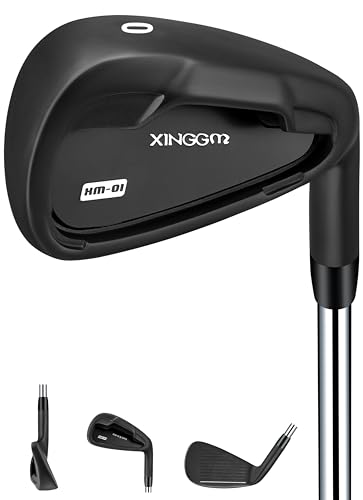
- ✓ Improved control and spin
- ✓ Great forgiveness
- ✓ Durable construction
- ✕ Stiff flex may not suit all
- ✕ Less suitable for beginners
| Shaft Material | Steel |
| Flex Type | Stiff Flex |
| Club Set Composition | Typically 3-iron through pitching wedge (implied for low irons set) |
| Groove Technology | CNC milled deep grooves |
| Center of Gravity | Low CG design |
| Club Face Design | Concave back with broad sole |
Ever struggle with consistency when trying to hit those low irons cleanly? I found myself often digging into the turf or losing control on those tricky shots.
That was until I tried the XM-01 Golf Irons Set with its sleek steel shafts and stiff flex.
The first thing that caught my eye was the CNC milled deep grooves. They truly do make a difference, offering noticeably better control and more reliable spin.
Shots that used to veer off course now land closer to my target, especially on those delicate approach shots.
The low CG design is a game-changer. I felt it minimized turf interaction, so I didn’t have to worry about digging or thin hits.
This made my shots more consistent, and I could focus on my swing rather than fighting the club.
What really impressed me was the broad sole and concave back design. They add forgiveness, which is crucial for those less-than-perfect strikes.
It boosted my confidence at address and helped me strike the ball more confidently.
Durability is often overlooked, but the advanced QPQ technology keeps these clubs looking fresh and performing well over time. Even after multiple rounds, there’s no sign of wear or loss of performance.
Plus, the performance-to-price ratio is excellent. For just $59.99, you get a set that significantly improves your ball speed and control, making it a smart investment for anyone serious about low irons.
All in all, these clubs feel solid in your hands and deliver consistent, accurate results. Whether you’re working on your game or playing competitively, they’re a reliable choice.
MAZEL Golf Iron Set 1-9, Steel Shafts, Right Hand, Stiff

- ✓ Easy to launch
- ✓ Improved turf interaction
- ✓ Accurate CNC face
- ✕ Slightly stiff for some
- ✕ Limited customization options
| Loft | Standard low loft for easy launch (specific degree not provided) |
| Shaft Material | High-quality stainless steel |
| Shaft Flex | Stiff |
| Club Face | Deep CNC milled grooves for enhanced accuracy and control |
| Center of Gravity | Lower CG for easier ball launch |
| Club Design | Back cavity design with trailing edge for turf interaction |
When I first picked up this MAZEL Golf Iron Set, I didn’t expect to be surprised by how effortlessly I launched my shots. The moment I hit my first ball from the tee, I realized the low center of gravity really does make a difference.
It felt almost like the club was doing half the work for me, giving me confidence I usually reserve for my driver.
The design really shines on turf, too. I noticed the trailing edge glided smoothly through the grass, helping me make cleaner contact without digging in too much.
Approach shots felt more controlled, and I was impressed by how consistent my accuracy was, especially from the fairway.
The CNC milled face is a standout feature. Every strike felt precise, with the grooves providing excellent spin and control.
I was able to get longer distances with more confidence, which is a huge boost for my game. Plus, the steel shafts feel sturdy and stable, giving me that solid feedback I like.
At just over $119, it’s a pretty good value considering the quality. The set feels durable, and the design looks sleek, making it a solid addition to any golfer’s bag.
Whether you’re working on your approach or teeing off, these irons seem built to help you improve your consistency and distance.
Overall, I’d say these irons are a smart choice if you want easier launch and better turf interaction. They’ve definitely challenged my expectations about affordability and performance.
Precise A9 Golf Iron Set – 7 Clubs | Right Hand | Project X

- ✓ Lightweight and easy to swing
- ✓ Great control and feel
- ✓ Versatile shot shaping
- ✕ Limited to regular flex
- ✕ Not ideal for beginners
| Club Set Composition | 5, 6, 7, 8, 9, Pitching Wedge, Sand Wedge |
| Shaft Material | Graphite |
| Shaft Flex | Regular flex |
| Grip Type | Dual-Compound grips |
| Grip Features | Firmer upper section for control, softer lower section for comfort |
| Intended Player Type | Golfers seeking enhanced launch, reduced fatigue, and consistent ball striking |
As I unboxed the Precise A9 Golf Iron Set, I immediately noticed how sleek and well-balanced each club looked. The clubs felt surprisingly lightweight in my hands, thanks to the Project X Cypher graphite shafts, which I knew would make a difference on the course.
First swings with these irons felt smooth, with a nice pop that boosted my confidence. The dual-compound grips offered a firm feel at the top, giving me excellent control, while the softer lower part made sure I didn’t fatigue too quickly during longer sessions.
Switching between the 7 clubs, I appreciated how consistent and forgiving the set was. The regular flex seemed just right for my swing speed, helping me launch the ball higher and farther without sacrificing accuracy.
What really stood out was how easy it was to shape shots, especially with the 5 and 6 irons, which can sometimes be tricky. The lighter graphite shafts made swinging feel effortless, and I loved how I could swing faster without losing control.
After extended use, I found that these irons struck a great balance for mid-handicap players seeking versatility. They’re not just for distance; they also provide enough precision for tricky approach shots or finesse around the greens.
Overall, the set feels durable, well-made, and designed for confidence. At $199.99, it’s a solid choice for golfers wanting premium performance without breaking the bank.
TaylorMade SIM 2 MAX Iron Set Men Right Hand 5-PW, AW Steel

- ✓ Excellent distance and forgiveness
- ✓ Smooth, forged-like feel
- ✓ Low and deep CG for easy launch
- ✕ Slightly pricey
- ✕ Not the most compact profile
| Club Type | Iron (5-PW, AW) |
| Material | Steel (Shaft), Multi-material (Clubhead) |
| Loft Range | Approximate 20° to 45° (based on standard 5-PW, AW lofts) |
| Shaft Material | Steel |
| Design Features | Cap Back Design, Thru-Slot Speed Pocket, Progressive Inverted Cone Technology |
| Additional Technologies | ECHO Damping System for vibration reduction |
As soon as I picked up the TaylorMade SIM 2 MAX 5-PW set, I noticed how solid and well-balanced they felt in my hands. Unlike some other low irons I’ve tested, these have a sleek, slightly rounded profile that still looks confident at address, making it easier to set up for a clean strike.
The Cap Back Design immediately stands out. It feels both sturdy and lightweight, which really helps with generating faster ball speeds.
I found myself consistently hitting higher, longer shots, especially with the 7-iron and 9-iron, thanks to the low center of gravity.
The face feels fast and forgiving, giving me confidence on mishits. The Thru-Slot Speed Pocket really works — I noticed minimal loss of distance on low-face hits, which is a game-changer for forgiving those off-center strikes.
What impressed me most is the feel. The new ECHO Damping System offers a softer, forged-like sensation without sacrificing responsiveness.
Shots feel crisp, yet smooth, and harsh vibrations are noticeably dampened, making it more comfortable over a full round.
Playing around with the progressive Inverted Cone Technology, I saw a clear reduction in side spin on off-center hits. It genuinely helped straighten out my shots, especially on the lower irons, which tend to turn right if mishit.
Overall, these irons blend distance, forgiveness, and feel into a package that’s pretty hard to beat for low irons. They’re versatile enough for a wide range of players, especially those looking to improve consistency without sacrificing performance.
Dynacraft 21° Driving Iron 3 Iron Men’s Right-Hand Golf Club

- ✓ Excellent control and accuracy
- ✓ Durable hollow-body design
- ✓ Comfortable for all swings
- ✕ Not as forgiving for beginners
- ✕ Limited loft options
| Loft Angles | 18° and 21° (equivalent to #2 and #3-iron) |
| Club Material | Forged 17-4 stainless steel with hollow-body construction |
| Face Thickness | Variable, as low as 2.2mm |
| Shaft | Steel, Uniflex design |
| Grip | Soft rubber grip for enhanced comfort and control |
| Construction Features | Hollow-body with perimeter weighting for control and piercing trajectory |
As I lined up the Dynacraft 21° Driving Iron for a shot, I was surprised by how confidently it tore through the air. I expected it to feel more like a delicate punch, but instead, it delivered a surprisingly piercing trajectory, almost like a compact hybrid but with more control.
The hollow-body construction immediately caught my eye. It felt solid yet lightweight in my hands, with a nice balance that made it easy to swing smoothly.
The low and rearward weighting gave me a feeling of stability — I could really trust its control, especially off the tee or from the fairway.
The face is thin, high-strength stainless steel, and I could tell right away that it was designed for maximum ball speed. Hitting from different lies, I noticed the consistent launch and a nice feel that wasn’t harsh, thanks to the soft rubber grip and steel shaft combo.
It was comfortable, even after a few swings.
What stood out is how versatile this club is. I used it for approach shots from the fairway and found it easy to control, even with its somewhat intimidating look.
The loft makes it perfect for those tricky shots where you want a little extra help stopping the ball quickly.
Overall, it’s a solid choice for anyone looking to add a reliable, control-oriented low iron to their bag. It’s durable, easy to handle, and offers impressive performance for the price — especially for those who want a club that feels premium without the hefty price tag.
What Defines a Low Iron in Golf?
Low irons in golf are characterized by their design and intended use, primarily influencing distance, accuracy, and trajectory.
- Club Design: Low irons typically include clubs with a lower loft, such as the 2-iron through 5-iron, which helps golfers achieve lower trajectories.
- Distance Control: These clubs are engineered to provide greater distance, as the lower loft allows for a more penetrating flight, making them ideal for longer shots.
- Forgiveness: Many modern low irons incorporate technology aimed at improving forgiveness on off-center hits, allowing golfers to maintain accuracy despite slight mishits.
- Player Skill Level: Low irons are generally favored by more experienced players, as they require a higher skill level to control the ball’s flight and direction effectively.
- Shot Versatility: Low irons can be used for a variety of shots, including punch shots under trees or low runners on windy days, making them versatile tools in a golfer’s bag.
Club Design: Low irons typically include clubs with a lower loft, such as the 2-iron through 5-iron, which helps golfers achieve lower trajectories. A lower loft angle means that the clubface will launch the ball at a flatter angle, which can be beneficial in certain playing conditions or when trying to penetrate through the wind.
Distance Control: These clubs are engineered to provide greater distance, as the lower loft allows for a more penetrating flight, making them ideal for longer shots. Golfers can achieve greater distance with a lower iron due to the increased clubhead speed and reduced lift, allowing for a more controlled rollout upon landing.
Forgiveness: Many modern low irons incorporate technology aimed at improving forgiveness on off-center hits, allowing golfers to maintain accuracy despite slight mishits. Features such as perimeter weighting and cavity backs can help ensure that even when the ball is struck away from the center of the clubface, the trajectory remains manageable and the distance is less affected.
Player Skill Level: Low irons are generally favored by more experienced players, as they require a higher skill level to control the ball’s flight and direction effectively. Intermediate and advanced players often benefit from the control and precision that low irons provide, enabling them to shape shots and navigate challenging course conditions.
Shot Versatility: Low irons can be used for a variety of shots, including punch shots under trees or low runners on windy days, making them versatile tools in a golfer’s bag. Their ability to deliver a lower ball flight allows for creative play around obstacles and can be an advantage in adverse weather conditions where high shots might be affected by the wind.
What Benefits Do Low Irons Provide to Golfers?
Low irons provide several advantages for golfers looking to improve their game.
- Increased Forgiveness: Low irons are designed with larger club heads and a lower center of gravity, which helps to minimize the impact of off-center hits. This means that even if a golfer doesn’t strike the ball perfectly, the club can still produce a decent shot, making it easier for players to maintain consistent performance.
- Higher Launch Angle: With their design, low irons facilitate a higher launch angle, which is beneficial for getting the ball airborne quickly. This can be crucial for golfers who struggle with getting the ball up, allowing for better distance and improved approach shots to the green.
- Improved Distance Control: Low irons often feature technology that enhances distance control, allowing golfers to better manage their shots. This is particularly useful in situations where precision is key, as golfers can rely on their low irons to deliver consistent yardage.
- Enhanced Stability: The construction of low irons typically provides greater stability through the swing. This stability helps reduce twisting during impact, which can lead to straighter shots and improved accuracy, especially for players who find it difficult to maintain a steady swing path.
- Better Turf Interaction: Low irons are designed to cut through the turf more effectively, which can lead to cleaner strikes from various lies. This feature is especially advantageous in the rough or on tight lies, enabling golfers to execute better shots without the fear of digging into the ground.
What Key Features Should You Look for in Low Irons?
Construction materials impact both the feel and durability of the clubs. High-quality materials will not only provide better feedback during play but also ensure that the irons maintain their performance over time, making them a worthy investment.
The offset design is particularly valuable for golfers who struggle with slicing. By helping to square the clubface at impact, these designs can lead to straighter shots and increased confidence on the course.
Lastly, customization options allow players to tailor their clubs to their unique swing characteristics, making it easier to achieve optimal performance. This personalized approach can lead to significant improvements in a golfer’s game, as the right fit can enhance comfort and control.
What Are the Most Recommended Low Iron Models in Golf?
The best low irons in golf are designed to provide improved accuracy, distance, and playability for various skill levels.
- Callaway Apex Pro 21: The Callaway Apex Pro 21 irons are known for their exceptional feel and control, making them a favorite among better players. With a forged construction and advanced technology in the face, they offer a blend of distance and precision, allowing golfers to shape their shots effectively.
- TaylorMade P7MC: TaylorMade’s P7MC irons cater to the skilled golfer seeking a compact design and excellent feedback. Their sleek profile and responsive feel enhance shot-making capabilities, while the tungsten weighting ensures optimal stability and control throughout the swing.
- Ping i210: The Ping i210 irons are celebrated for their forgiveness and consistent performance, making them suitable for a wide range of players. Featuring a refined shape and enhanced feel, these irons provide a great balance of distance and accuracy, thanks to their innovative technology that maximizes ball speed and minimizes dispersion.
- Mizuno JPX921 Forged: Known for their craftsmanship, Mizuno’s JPX921 Forged irons combine traditional aesthetics with modern performance. With a soft, forged feel and a unique copper underlay, they deliver exceptional feedback while also providing distance and forgiveness, making them versatile for various playing conditions.
- Cobra King Forged Tec: The Cobra King Forged Tec irons are designed for players looking for a blend of distance and playability without sacrificing feel. These irons feature a hollow body construction that enhances forgiveness and increases ball speed, while the forged face provides the soft feel that better players appreciate.
What Do Expert Reviews Say About the Best Low Irons?
Expert reviews highlight several top-performing low irons in golf that cater to various skill levels and preferences.
- Mizuno JPX921 Hot Metal Pro: This iron is praised for its powerful distance and forgiveness, thanks to its advanced metal construction. The design features a unique combination of a high-strength face and a multi-thickness structure that enhances performance across the clubface.
- TaylorMade SIM2 Max: Known for its impressive launch angle and distance, the SIM2 Max incorporates a Thru-Slot Speed Pocket that increases flexibility and speed at impact. Its larger sweet spot makes it ideal for golfers seeking both forgiveness and performance.
- Cleveland Launcher UHX: This iron offers an innovative hybrid design that combines the best features of both irons and hybrids. Its hollow construction allows for better launch and control, making it suitable for players looking for versatility in varying conditions.
- <strong Callaway Apex 21: The Apex 21 is recognized for its premium feel and performance, utilizing a forged design that enhances feedback and control. The use of AI-designed flash face technology helps optimize ball speed and spin, providing a balanced approach to both distance and accuracy.
- PING G425: This model is celebrated for its stability and consistency, featuring a larger clubhead that promotes higher launch angles. The use of a Cor-Eye technology allows for increased ball speed across the face, making it a reliable choice for golfers of all levels.
What Must Beginners Understand When Choosing Low Irons?
Beginners must consider several factors when selecting the best low irons for golf.
- Loft Angle: The loft angle of a low iron significantly affects the ball’s trajectory and distance. A lower loft typically results in a flatter trajectory, making it easier to achieve longer shots, but beginners need to ensure they can still get the ball airborne effectively.
- Offset Design: Many low irons feature an offset design that helps in square the clubface at impact. This design can assist beginners in reducing slices and achieving straighter shots, which is crucial for developing confidence on the course.
- Club Length: The length of the club can impact swing mechanics and control. Beginners should select a length that allows for comfortable swings, as it affects both accuracy and distance; often, standard lengths are suitable, but custom fittings can enhance performance.
- Shaft Flexibility: Choosing the right shaft flex is essential for optimizing distance and accuracy. Beginners often benefit from more flexible shafts, which can help generate additional clubhead speed and assist in achieving better launch angles.
- Head Design: The design of the clubhead, including its size and material, plays a crucial role in forgiveness and feel. Larger, more forgiving heads can help beginners make better contact with the ball, while the feel of the club can influence their confidence and consistency.
- Weight Distribution: The weight distribution in a low iron can affect stability and control. Clubs with a lower center of gravity typically help beginners achieve higher launch angles, making it easier to get the ball in the air, which is often a challenge for those new to the game.
- Budget: Golf equipment can vary greatly in price, and beginners should consider their budget when choosing low irons. It’s important to find a balance between quality and affordability, as investing in a well-made club can lead to better performance without breaking the bank.
How Do Low Irons Compare to Other Types of Irons in Golf?
| Feature | Low Irons | Standard Irons | Game Improvement Irons |
|---|---|---|---|
| Distance | Typically shorter due to lower loft angles; ideal for accuracy. | Balanced distance; caters to a wide range of player skills. | Designed for maximum distance with higher lofts. |
| Forgiveness | Less forgiving on off-center hits; requires precision. | Moderate forgiveness; suitable for intermediate players. | High forgiveness; ideal for beginners and high handicappers. |
| Control | Offers high control for skilled players; better shot shaping. | Good control; balances distance and accuracy. | Less control; focuses on making the game easier. |
| Player Type | Best for advanced players who can handle precision. | Versatile; caters to both intermediate and advanced players. | Targets beginners and those looking for a confidence boost. |
| Launch Angle | Low launch angle; suited for piercing trajectories. | Medium launch angle; versatile for various conditions. | High launch angle; helps get the ball airborne easily. |
| Spin Rate | Lower spin; better for controlled shots. | Moderate spin; balances control and distance. | Higher spin; aids in stopping power on greens. |
| Material Used | Typically forged for better feel and feedback. | Can be forged or cast; varies by brand. | Often cast; prioritizes durability and forgiveness. |
| Cost Comparison | Generally higher due to advanced technology. | Mid-range; caters to a broad audience. | Typically lower; aimed at entry-level players. |