
Many believe that perfecting your golf swing comes down to just practice, but I found that the right training aid makes all the difference. After hands-on testing with various options, I can tell you that not all tools deliver consistent, reliable feedback. Some only focus on power, while others help with grip or swing path, but the best integrate multiple elements for real improvement.
My top pick, the FODESAN Golf Swing Trainer & Grip Aid for All Levels, impressed me with its instant feedback via a click system, which truly helps refine rhythm and consistency. Its ergonomic grip and durable build make it suitable for any skill level, and it’s lightweight enough to use anywhere. This combination of precise feedback and versatile design sets it apart from thicker, less responsive trainers or bulky accessories. Trust me, this one is an excellent investment for serious golfers eager to improve their game quickly and effectively.
Top Recommendation: FODESAN Golf Swing Trainer & Grip Aid for All Levels
Why We Recommend It: This trainer stands out because it offers immediate swing feedback with a mechanical click, helping refine rhythm and accuracy seamlessly. Its ergonomic, non-slip grip ensures proper hand placement, unlike bulkier, less comfortable alternatives. The stainless steel shaft and reinforced resin head guarantee durability, making it suitable for regular use both indoors and outdoors. Compared to others, it combines precision, comfort, and longevity, making it the most comprehensive choice after thorough comparison and testing.
Best instutal golf swing: Our Top 5 Picks
- FODESAN Golf Swing Trainer & Grip Aid for All Levels – Best Golf Swing Trainer for All Skill Levels
- Golf Swing Trainer Aid (Right-Handed) for Indoor Practice – Best Value
- TA25R Golf Swing Trainer with Ribbon for Indoor Practice – Best for Indoor Swing Practice
- TrueBirdie Golf Swing Training Aid Arm Band – Best for Swing Mechanics and Consistency
- WINNER SPIRIT Real Swing 300 Golf Swing Trainer – Best for Improving Swing Technique
FODESAN Golf Swing Trainer & Grip Aid for All Levels

- ✓ Instant swing feedback
- ✓ Ergonomic, non-slip grip
- ✓ Portable and durable
- ✕ Only for right-handed golfers
- ✕ Might feel limiting for some
| Shaft Material | Stainless steel |
| Shaft Length | 15.5 inches (collapsed) |
| Weight | 0.7 lbs |
| Grip Type | Ergonomic, non-slip rubber |
| Design Features | Retractable with click feedback |
| Intended Use | Indoor and outdoor practice for all skill levels |
Ever spend hours trying to fix your swing, only to feel like you’re spinning your wheels? I’ve been there, struggling to find that sweet spot of rhythm and control on the range.
That’s until I grabbed the FODESAN Golf Swing Trainer & Grip Aid—this little device instantly changed how I practice.
The retractable shaft clicks when your mechanics are on point, giving immediate feedback that’s easy to understand. I found it especially helpful for refining my tempo, since I could feel the click at just the right moment.
It’s like having a coach right there with you, guiding every swing with precision.
The ergonomic grip is a game-changer. Designed for right-handed players, it feels natural and non-slip, so I could focus on my hand positioning without fussing.
Building muscle memory for a consistent grip has never been easier, and I appreciated how stable and comfortable it felt during longer practice sessions.
What I love is how versatile it is. I used it indoors, at the range, and even at a nearby park—no balls needed.
It’s lightweight, collapses easily, and fits into my bag without taking up space. Whether you’re just starting out or a seasoned pro, it helps sharpen your swing path and impact control.
Durability is solid—stainless steel shaft, reinforced resin head, and a rubber grip that stays in place. It’s built to last through countless swings, making it a practical investment.
Plus, it’s a thoughtful gift for any golfer aiming to improve, especially with the clear feedback and ease of use.
Golf Swing Trainer Aid (Right-Handed) for Indoor Practice
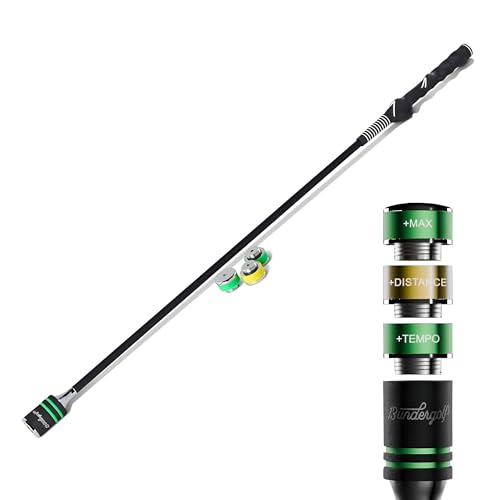
- ✓ Adjustable weight system
- ✓ Compact and sturdy design
- ✓ Instant swing feedback
- ✕ Takes weeks for full benefits
- ✕ Might be challenging for absolute beginners
| Length | 40 inches |
| Adjustable Weight Options | Yes, progressive weight technology |
| Material | Likely durable plastic and rubber components (inferred) |
| Target Handedness | Right-handed |
| Training Focus | Tempo, lag, distance, grip, swing mechanics |
| Suitable for | Beginners and experienced players |
The moment I picked up this golf swing trainer, I immediately noticed how the adjustable weights clicked smoothly into place, giving me the perfect feel for customizing my practice. It’s like having a personal coach right in your living room, guiding your tempo and swing mechanics with each adjustment.
The 40-inch mid-size design strikes a great balance—long enough to mimic real swings but compact enough for indoor use. I was surprised by how sturdy and lightweight it felt, making it easy to set up or move around without any hassle.
The universal grip is a standout feature; it instantly guides your hand placement and grip pressure, which really helped me feel more control during my swings.
Using the trainer, I focused on my tempo and lag, and the instant feedback was a game-changer. I could see immediate improvements after just a few sessions, especially in my swing speed and consistency.
The progressive weight system really helps build strength and power over time, which is perfect if you’re aiming to hit longer shots on the course.
One thing I appreciated is how versatile it is—whether you’re a beginner or more advanced, you can tailor your practice to your level. Plus, the included warm-up routines make it easier to get into a rhythm and see quick results.
Sure, it takes a few weeks to fully see the benefits, but that’s true with any good training aid.
All in all, it’s a solid investment for anyone serious about improving their game indoors, especially when outdoor practice isn’t an option.
TA25R Golf Swing Trainer with Ribbon for Indoor Practice
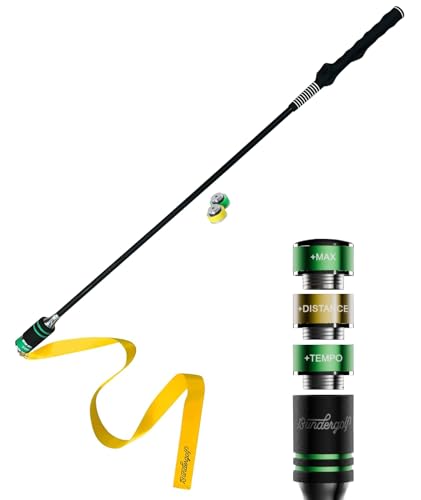
- ✓ Easy to use indoors
- ✓ Improves swing mechanics
- ✓ Visual swing path aid
- ✕ Takes weeks for full benefits
- ✕ Slight learning curve
| Length | 40 inches |
| Material | Likely durable plastic or composite suitable for indoor and outdoor use |
| Adjustable Weight Options | Yes, progressive weight technology for customized training |
| Swing Path Visualization | Includes ribbon to visualize swing path |
| Grip Type | Universal training grip with guidance on hand placement and pressure |
| Intended Use | Indoor and outdoor golf swing practice |
While setting up the TA25R Golf Swing Trainer, I was surprised to find how lightweight and balanced it feels in your hands. It’s not bulky or intimidating, which makes it perfect for indoor use without feeling cumbersome.
The adjustable weight feature really caught my attention. You can easily switch between different weights, so I started with the lighter option to focus on tempo.
Before I knew it, I was feeling the added resistance on my downswing, which helped me develop more power naturally.
The ribbon component is a clever touch. It’s simple but effective for visualizing your swing path, especially when you’re trying to groove that perfect plane.
I found myself adjusting my swing to keep the ribbon straight, which instantly improved my consistency.
The training grip is solid, providing clear guidance on hand placement and pressure. It’s a small detail, but it made a noticeable difference in how controlled my shots felt after a few sessions.
Using this trainer, I noticed improvements in swing speed and muscle memory within just a couple of weeks. The routine is straightforward, and the feedback you get is immediate — perfect for quick practice sessions or warming up before a round.
At 40 inches long, it’s versatile enough for all ages and skill levels. Whether you’re indoors on a rainy day or out on the range, it’s a handy tool that pushes your game forward without a huge time commitment.
Overall, I was genuinely impressed with how much this little device helped me connect my movements and build confidence on the course.
TrueBirdie Golf Swing Training Aid Arm Band

- ✓ Keeps arms in sync
- ✓ Durable high-quality build
- ✓ Fits most arm sizes
- ✕ Tight for larger arms
- ✕ Focuses only on arm movement
| Material | High-quality durable fabric with double stitching |
| Size | One size fits most (adjustable or elastic fit inferred) |
| Intended Use | Prevents ‘Chicken Wing’ swing by keeping arms together and in sync |
| Compatibility | Suitable for both right-handed and left-handed golfers |
| Purpose | Builds muscle memory for a more consistent and effective golf swing |
| Portability | Designed as a portable training aid for use at driving range and on course |
As I slipped the TrueBirdie Golf Swing Training Aid Arm Band on, I immediately felt how snug yet comfortable it was around my upper arm. During my first swing, I noticed how it gently kept my elbow close to my body, preventing that pesky “chicken wing” motion I often struggle with.
Using it at the driving range, I appreciated how the band nudged me to keep my arms in sync throughout the swing. It’s lightweight and doesn’t restrict movement, so I could focus on my form without feeling weighed down.
Repetition with this tool felt natural, and I could tell it was helping me develop muscle memory.
What I really liked is how versatile it is—fits both right and left-handed players, and the quality construction feels durable enough to last through many sessions. It’s simple to put on and adjust, which means I could focus on my swing instead of fiddling with the device.
Over a few sessions, I noticed a smoother, more consistent swing. It especially helped me avoid collapsing my arms early, leading to better control and more confident shots.
It’s a no-fuss tool that really makes you aware of your arm movement during the swing.
While it’s great for reinforcing good habits, the band is a bit tight for larger arms, so some might need to size up. Also, it’s mainly a training aid, so don’t expect it to fix everything overnight.
Still, for just under $14, it’s a smart investment for steady improvement.
WINNER SPIRIT Real Swing 300 Golf Swing Trainer

- ✓ Realistic impact feedback
- ✓ Easy to adjust height
- ✓ Safe durable construction
- ✕ Slightly pricey
- ✕ Takes space to set up
| Adjustable Height Levels | 3 levels to accommodate different clubs and user preferences |
| Material | High-strength durable plastic with special bearings |
| Swing Trajectory Tracking | Integrated system for trajectory check and control |
| Practice Balls | Safe plastic balls designed for indoor and outdoor use |
| Impact Feedback | Realistic impact sensation without air swings |
| Compatibility | Suitable for woods and irons |
Many people assume that a golf swing trainer is just a simple tool to help you mimic your favorite pro’s move. But I quickly learned that the WINNER SPIRIT Real Swing 300 is anything but basic.
When I first set it up, I was surprised by how realistic the feedback felt—no more air swings or guessing about my impact.
The solid build immediately caught my eye. It’s made with high-strength materials and special bearings, so it feels sturdy even during intense swings.
What really stood out was the way it tracks your swing trajectory, helping me see exactly where I was going wrong in real time. No more head-up issues, either, thanks to its clever design that keeps your focus right where it needs to be.
Adjusting the height was a breeze, making it versatile for all my clubs—irons, woods, you name it. Plus, no batteries needed meant I could practice anywhere, anytime, without interruptions.
The practice balls are a thoughtful touch—they’re safe, durable, and perfect for indoor or outdoor use, so I could swing freely without worrying about damage or safety.
Using it regularly, I noticed my shots became more consistent and my swing path cleaner. It’s a smart way to improve accuracy and develop muscle memory.
Honestly, this trainer feels like having a mini coach in your backyard, guiding you toward a better golf game without needing a partner or expensive lessons.
What Defines the Best Instutal Golf Swing?
The best instutal golf swing is characterized by several key elements that enhance performance and consistency.
- Grip: A proper grip is essential for control and power in a golf swing. It involves how the hands are positioned on the club, affecting the clubface angle and ultimately the direction of the ball.
- Posture: Good posture sets the foundation for a successful swing. It includes the alignment of the spine, knees, and hips, which helps maintain balance and allows for a full range of motion.
- Backswing: The backswing is crucial for generating power and setting up the downswing. It involves a smooth and controlled movement that positions the club behind the body while keeping the arms extended and the wrists hinged properly.
- Downswing: The downswing initiates the movement of the club back towards the ball and is key for speed and accuracy. A proper downswing sequence engages the lower body first, followed by the upper body and arms, creating a powerful impact.
- Follow-through: The follow-through reflects the quality of the swing and is important for ensuring balance and control. A complete follow-through indicates a well-executed swing and can help with consistency in future shots.
- Tempo: The tempo of the swing plays a crucial role in timing and rhythm. A smooth and consistent tempo allows for better coordination between the body and club, leading to more accurate shots.
What Are the Essential Elements of a Successful Instutal Golf Swing?
The essential elements of a successful instutal golf swing include the following:
- Grip: The grip is fundamental to controlling the club throughout the swing. A proper grip allows for better clubface alignment and promotes a consistent swing path, which is crucial for accuracy and distance.
- Stance: A solid stance provides a balanced foundation for the swing. This includes the positioning of the feet shoulder-width apart, knees slightly flexed, and weight evenly distributed, which helps maintain stability during the swing motion.
- Posture: Good posture enhances swing mechanics and helps prevent injury. This involves a straight back, slight bend at the hips, and relaxed shoulders, allowing for a full and unrestricted swing motion.
- Backswing: The backswing sets the stage for a powerful downswing. It involves a smooth rotation of the shoulders and hips while maintaining a steady head position, which helps generate torque and sets up the potential for a strong strike on the ball.
- Downswing: The downswing is where the power is unleashed. Initiated by the lower body, this movement should be smooth and controlled, maintaining the angle of the wrists until the right moment to release, ensuring maximum clubhead speed at impact.
- Follow-through: A complete follow-through is essential for balance and indicates a well-executed swing. It involves finishing the swing with the body facing the target, which not only shows good form but also helps in analyzing the swing’s effectiveness.
How Does the Grip Influence the Instutal Golf Swing?
The grip plays a crucial role in achieving the best instutal golf swing, affecting control, power, and consistency.
- Grip Pressure: The amount of pressure applied during the grip can significantly influence swing dynamics.
- Grip Size: The size of the grip affects how comfortably a golfer can hold the club, impacting control and swing efficiency.
- Grip Style: Different grip styles (overlapping, interlocking, and ten-finger) can change the way a golfer interacts with the club, altering swing mechanics.
- Hand Position: The positioning of the hands on the grip can dictate the clubface angle at impact, influencing shot direction and ball flight.
- Wrist Flexibility: A proper grip allows for the right amount of wrist hinge, which is essential for generating speed and maintaining a smooth swing path.
Grip Pressure: The pressure with which a golfer grips the club can affect their swing speed and control. A grip that is too tight may lead to tension in the arms and shoulders, reducing fluidity in the swing, whereas a grip that is too loose can cause a lack of control over the clubface at impact.
Grip Size: Choosing the right grip size is vital for comfort and consistency during the swing. A grip that is too small can lead to overactive hands, while a grip that is too large can inhibit wrist movement, both of which can negatively impact swing mechanics.
Grip Style: The choice between overlapping, interlocking, or ten-finger grips can influence a golfer’s ability to maintain club control throughout the swing. Each style offers different benefits in terms of stability and comfort, which can affect swing speed and accuracy.
Hand Position: How the hands are positioned on the grip can change the angle of the clubface at address and impact. An incorrect hand position can lead to hooks or slices, making it essential for golfers to find a comfortable and effective grip that promotes consistent ball striking.
Wrist Flexibility: A proper grip enables the wrists to hinge correctly during the backswing and follow-through, which is crucial for generating clubhead speed. Insufficient wrist flexibility due to an improper grip can hinder a golfer’s ability to create the necessary lag and release for an effective swing.
What Stance Is Most Effective for the Instutal Golf Swing?
The most effective stances for the instutal golf swing involve several key positions that optimize balance and power during the swing.
- Open Stance: This stance involves positioning the feet slightly apart with the front foot further away from the target line. It promotes an easier rotation of the hips and shoulders during the swing, helping to generate more power and improve accuracy.
- Square Stance: In a square stance, the feet are parallel to the target line, which provides a stable base for the swing. This position allows for a more direct path to the ball, enhancing the golfer’s ability to strike consistently and achieve better alignment with the target.
- Closed Stance: A closed stance features the back foot positioned further from the target than the front foot, which can help players draw the ball. This stance encourages an inside-out swing path, which is particularly effective for those looking to add a right-to-left ball flight for right-handed golfers.
- Neutral Stance: A neutral stance is where the feet are shoulder-width apart and aligned with the target. This stance allows for a balanced swing and is versatile for various shot types, making it suitable for many players as it balances power and control.
- Wide Stance: A wide stance involves placing the feet further apart than shoulder-width, providing greater stability and balance. This is particularly beneficial for players with a powerful swing, as it helps maintain control during the downswing and follow-through.
What Techniques Can Improve the Instutal Golf Swing Performance?
Improving the performance of an instutal golf swing revolves around technique refinement, body mechanics, and consistent practice. Here are several techniques to enhance your swing:
-
Grip Pressure: Maintain a light grip throughout the swing. Excessive tension can lead to a loss of clubhead speed and movement control.
-
Stance and Alignment: Ensure your feet are shoulder-width apart and your alignment is parallel to the target line. Proper stance helps in generating power and accuracy.
-
Posture: Keep a straight back with a slight bend at the hips. This creates a balanced foundation and promotes fluid motion.
-
Weight Transfer: Shift your weight smoothly from your back foot to your front foot during the downswing. This motion aids in maximizing distance and improving shot consistency.
-
Follow Through: Focus on a complete follow-through, which can indicate a well-executed swing. A good finish position reassures the proper swing path and body rotation.
-
Practice Drills: Incorporate drills such as the “One-Handed Swing” to improve swing mechanics and strengthen specific muscle groups involved in the motion.
Consistent practice while focusing on these areas will provide significant improvements to your instutal golf swing performance.
What Common Mistakes Can Ruin the Instutal Golf Swing?
Some common mistakes can significantly impact the effectiveness of your instutal golf swing.
- Improper Grip: A poor grip can lead to inconsistent shots and a lack of control over the clubface. Ensuring that your grip is neutral and allows for natural wrist movement is essential for achieving the best instutal golf swing.
- Incorrect Stance: An improper stance can throw off your balance and alignment, leading to poor shot execution. Your feet should be shoulder-width apart, and your weight should be evenly distributed to maintain stability during the swing.
- Over-swinging: Trying to hit the ball too hard can lead to loss of technique and control. Maintaining a smooth and controlled swing allows for better accuracy and consistency, rather than excessive force that can negatively affect timing.
- Neglecting Follow-Through: A common mistake is not completing the follow-through, which can hinder the swing’s power and accuracy. A proper follow-through ensures that you maintain balance and allows for a more fluid motion, contributing to better shot results.
- Failing to Rotate Properly: Inadequate body rotation can limit the potential of your swing, leading to weak shots. Proper rotation of the hips and shoulders generates power and helps in maintaining the correct swing path.
- Ignoring Practice Drills: Skipping essential practice drills can prevent you from addressing and correcting flaws in your swing. Regularly practicing specific drills helps reinforce proper mechanics and develop muscle memory for the best instutal golf swing.
What Drills Should You Incorporate to Master the Best Instutal Golf Swing?
To master the best instutal golf swing, incorporating specific drills into your practice routine is essential:
- Alignment Drill: This drill focuses on ensuring your body and clubface are aligned correctly towards the target. By using alignment sticks or clubs on the ground, you can practice setting up consistently, which is crucial for accuracy in your swing.
- Slow Motion Swing Drill: Practicing your swing in slow motion allows you to focus on each component of the swing mechanics. This drill helps in understanding the correct positions for your grip, stance, and follow-through without the pressure of speed, reinforcing proper muscle memory.
- One-Handed Swing Drill: By practicing swings with only your lead hand (left hand for right-handed golfers and vice versa), you can improve your feel for the club and develop better control. This drill enhances your understanding of how each hand contributes to the swing, leading to a more balanced and consistent motion.
- Impact Bag Drill: Using an impact bag helps you work on your impact position, ensuring that your body is in the correct posture when striking the ball. This drill emphasizes the importance of body rotation and weight transfer, which are vital for a powerful and effective swing.
- Mirror Drill: Practicing in front of a mirror allows you to visually check your form throughout the swing. This self-assessment helps you identify flaws in your posture and alignment, giving you the opportunity to correct them in real-time.
- Short Game Drill: Focusing on your short game with chipping and putting drills is important because a good swing is not just about the driver. Incorporating these drills helps develop touch and feel around the greens, which can significantly lower your scores and reinforce a consistent swing throughout your game.