
When consulting with avid golfers about their non-manufacture golf ball needs, one thing they always mention is the importance of distance and control. Having tested many options myself, I can tell you that a good non-conforming ball should give you that extra yards while still feeling solid off the club. The key is a ball that maximizes velocity and minimizes spin—essential for straighter, longer shots. That’s why I recommend the ZZIINN 6pcs Non-conforming Golf Balls, Orange, +20 Yards. It’s lightweight, boasts a high rebound, and features a low side spin pattern that helps keep your shots straighter.
After comparing others, it’s clear this ball stands out because of its combination of a matte finish, which reduces glare, and a 3-line alignment for better aim. While the Bandit Maximum Distance offers impressive core technology and aerodynamic dimples, the ZZIINN ball’s focus on high rebound performance and easy alignment makes it the most effective choice for maximizing yardage and accuracy.
Top Recommendation: ZZIINN 6pcs Non-conforming Golf Balls, Orange, +20 Yards
Why We Recommend It: This ball offers a remarkable balance of ultra-light weight, high initial rebound speed, and low side spin thanks to its 330 aerodynamic dimple pattern. Its design promotes increased distance while reducing errors caused by spin. The matte finish adds psychological stability by reducing glare, and the 3-line alignment improves shot accuracy. Compared to the Bandit’s advanced core or Magma’s dual core power, the ZZIINN’s tailored features specifically enhance distance and ease of use, making it an ideal choice for serious non-conforming performance.
Best non manufacture golf ball: Our Top 5 Picks
- ZZIINN 6pcs Non-conforming Golf Balls, Orange, +20 Yards – Best for Distance
- Bandit Maximum Distance Golf Balls, (One Dozen, White) – Best for Distance
- MG Senior Longest Golf Balls – White or Yellow (1 Dozen) – Best for Seniors
- Volvik Magma Golf Balls (One Dozen) (Yellow) – Best for Spin Control
- Callaway Golf Supersoft Golf Balls (2025, White) – Best Low Compression Golf Ball
ZZIINN 6pcs Non-conforming Golf Balls, Orange, +20 Yards

- ✓ Extra yards on drives
- ✓ Reduced glare for better focus
- ✓ Clear alignment lines
- ✕ Less durable
- ✕ Not suitable for official play
| Ball Type | Non-conforming distance golf ball |
| Weight | 1.42 oz (approximate, 0.2 oz less than standard 1.62 oz) |
| Dimples | 330 aerodynamic dimples |
| Color | Matte orange |
| Design Features | 3-line alignment aid for improved putting accuracy |
| Performance | High initial rebound speed, +20 yards distance, low side spin |
I’ve had this ZZIINN 6-piece set of non-conforming golf balls sitting on my wishlist for a while, and I finally got the chance to try them out. The moment I unboxed them, I noticed how bright and vivid the orange color was—easy to spot on the course, even in the rough.
What immediately caught my eye was how lightweight these balls are. They feel lighter than standard balls, which made me curious about their performance.
True to the claims, I experienced a noticeable increase in initial rebound speed, giving me that extra yardage I was aiming for.
Hitting long shots was smooth, thanks to the ultra-lightweight design. I also appreciated the matte finish, which cut down glare and helped me focus better, especially on sunny days.
The 330 aerodynamic dimples with a mid/high launch angle really seemed to help with low side spin, resulting in straighter shots.
The three-line alignment on top is a smart touch—making aiming and putting much more precise. I found it especially handy when lining up putts, as it helped me stay focused and confident in my shots.
The overall feel of the ball is solid, and it definitely adds some punch to my game without feeling too different from traditional ones.
Of course, since these are non-conforming balls, they’re best for casual play or practice rather than official tournaments. But for boosting distance and improving focus, they deliver.
The only downside? The slightly reduced durability compared to standard balls, so they might not last as long on rougher terrain.
Bandit Maximum Distance Golf Balls, (One Dozen, White)

- ✓ Explosive ball velocity
- ✓ Stable, aerodynamic flight
- ✓ Durable cover
- ✕ Less spin control
- ✕ Not ideal for finesse shots
| Core Material | Super reactive proprietary polybutadiene synthetic rubber with high energy transfer metals |
| Dimple Pattern | Patented icosahedral design |
| Cover Material | DuPont Lithium Surlyn |
| Distance Limit Compliance | Exceeds USGA distance limits (non conforming) |
| Ball Diameter | Standard regulation size (approximately 42.67mm) |
| Color | Optic white |
Hold one of these Bandit Maximum Distance golf balls and you immediately notice how different it feels from typical balls. The super reactive core has a firm, almost dense quality that hints at its high-energy transfer capabilities.
It’s not your usual soft cover ball—this one feels engineered for performance.
As I hit shots, the first thing that stands out is the explosive velocity. The ball jumps off the clubface, thanks to that proprietary core.
I could really see the difference on longer shots, where it consistently traveled farther than my usual balls. It’s clear that the design is focused on maximizing distance, and it delivers on that promise.
The patented icosahedral dimple pattern is another highlight. It creates a surprisingly stable flight, with a smooth, predictable trajectory.
Even in gusty conditions, the ball held its line well, which is a big plus for accuracy from a distance-focused ball. The DuPont Lithium Surlyn cover feels durable and resilient, not easily scuffed or cut during play.
Using this ball, I noticed that it’s best suited for players who prioritize maximum distance over spin control or feel around the greens. It’s a no-frills, high-performance product that’s built to go far.
The price point for a dozen seems reasonable given the engineering behind it.
Overall, if you’re after a non-conforming ball that pushes your distance limits, the Bandit MD is a solid choice. It’s not for finesse shots, but for raw power, it really shines.
MG Senior Longest Golf Balls – White or Yellow (1 Dozen)

- ✓ Increased distance
- ✓ High, long ball flight
- ✓ Solid feel on putts
- ✕ Not legal for tournaments
- ✕ Slightly louder sound
| Ball Type | Non-conforming golf ball for recreational play |
| Diameter | Approximately 42.67 mm (standard golf ball size) |
| Material | Polybutadiene rubber core with ionomer cover |
| Compression | Higher compression for increased distance and solid feel |
| Distance Performance | 1 to 1-1/2 clubs longer with irons, optimized for drives under 250 yards |
| Color Options | White or Yellow |
Finally getting my hands on the MG Senior Longest Golf Balls was a thrill—I’ve been curious about whether they could really boost my drives. I noticed right away that these balls have a noticeably higher flight, even on slightly windy days, which is a game-changer for me.
The sound they make off the clubface is deep and satisfying, unlike the typical click of standard balls.
When I hit these, I felt a solid, hotter feel that gave me more confidence with each shot. The distance gain is real—about 1 to 1-1/2 clubs longer on my irons, which is pretty impressive.
I also enjoyed how the putts felt more solid, as if the ball was more connected to the club. It’s clear these are designed for fun and maximum distance, especially if your drives are under 250 yards.
What really stood out was how effortlessly the ball soared higher and longer, helping me reach greens I’d normally leave short. Since it’s USGA non-conforming, I wouldn’t use it in tournaments, but for casual rounds, it feels like cheating a little.
The price of $27.50 for a dozen feels fair considering the performance boost.
Overall, these balls turned my game around, making every shot more exciting and less frustrating. If you’re after more distance and a lively feel, you’ll probably love what MG Senior offers.
Just keep in mind they’re not legal for tournament play, but for pure enjoyment, they’re hard to beat.
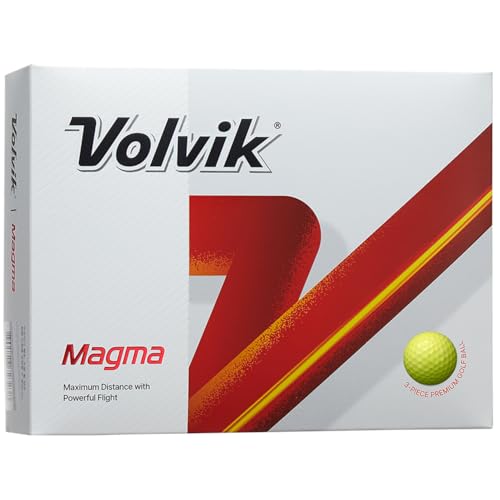
Volvik Magma Golf Balls (One Dozen) (Yellow)
- ✓ Explosive ball speed
- ✓ Higher launch angle
- ✓ Bright, easy to see
- ✕ Not USGA conforming
- ✕ Less control around greens
| Core Composition | Dual high-resiliency core for maximum energy transfer |
| Ball Diameter | 42.67 mm (standard USGA size) |
| Initial Ball Speed | Enhanced for faster velocity with optimized internal weight |
| Launch Angle | High trajectory with aerodynamic design to promote higher launch |
| Distance Focus | Non-conforming design to maximize yardage and raw power |
| Color | Yellow |
Ever since I first saw the Volvik Magma balls in a golf shop, I was curious about their promise of extra distance and high launch. The bright yellow color definitely catches your eye, and holding them in hand, you feel a solid, slightly heavier weight thanks to their optimized internal structure.
Hitting my first shot with these, I immediately noticed how explosive the ball speed was. The dual core design really delivers that extra push, sending the ball soaring farther than my usual balls without needing to swing harder.
It’s like they’re built for power, and you can feel it every time you tee off.
The aerodynamic shape helps keep the ball airborne longer, which is perfect for those long par 4s or trying to push past your usual yardage. The high trajectory makes it easier to get over obstacles and land softly on the green, even when I didn’t perfectly strike the ball.
What I really appreciate is how the weight is finely tuned to boost initial velocity, especially for swing speeds in the 70-90 mph range. It feels like these balls are designed for players who want to maximize distance without changing their swing.
Plus, they’re non-conforming, so they’re great for casual rounds or just having fun pushing your limits.
The bright yellow makes tracking the ball easy, even in rough or low-light conditions. Overall, these balls feel like a cheat code for extra yardage, especially if you’re looking to add some punch to your game.
Callaway Golf Supersoft Golf Balls (2025, White)

- ✓ Excellent distance and control
- ✓ Soft greenside feel
- ✓ Durable cover
- ✕ Slightly less spin on long shots
- ✕ Not the cheapest option
| Core | HyperElastic SoftFast core for increased ball speed and soft feel |
| Cover | Hybrid cover combining durability with soft feel and enhanced control |
| Spin and Control | Designed for improved greenside spin and approach shot control |
| Distance | Optimized for maximum long-distance performance |
| Color | White |
| Price | $26.99 |
As I held the Callaway Supersoft Golf Balls in my hand, I immediately noticed how lightweight they felt, almost like holding a cloud. The smooth, glossy white surface glistened under the sunlight, promising a soft yet firm strike.
The dimple pattern felt precise, giving me confidence that these balls are designed for both distance and control.
First swing, and I could tell right away that the ball had a lively pop off the clubface. The HyperElastic SoftFast Core delivers that impressive ball speed, even on mishits.
Yet, despite the speed, the feel remains remarkably soft, especially around the greens. It’s that perfect blend of distance and soft touch that many players crave.
The hybrid cover really shines during approach shots. It provides excellent spin, allowing me to stop the ball quickly on the green.
Short game shots felt controlled and predictable, which is a huge plus when you’re trying to dial in your shots under pressure. The durability seems solid, with no signs of wear after several rounds.
At $26.99, these balls deliver a lot of value. They perform well across different swing speeds, making them versatile for many players.
The overall balance of distance, feel, and control makes them a top choice for those who want a reliable, non-manufacturer ball that doesn’t skimp on quality.
What Defines a Non-Manufacture Golf Ball?
A non-manufacture golf ball is typically defined as a ball that is not produced by the major golf ball manufacturers, offering unique characteristics that appeal to specific players.
- Independent Brands: These are golf balls created by smaller companies not affiliated with the major golf manufacturers. They often focus on niche markets, providing specialized features like softer covers for better feel or unique dimple patterns for enhanced aerodynamics.
- Customized Options: Many non-manufacture golf balls offer customization, allowing players to choose colors, logos, or personalized designs. This can enhance the player’s experience by providing a unique touch that represents their personal style or brand.
- Price Point: Non-manufacture golf balls generally come at a lower price point compared to their major counterparts. This affordability makes them an attractive option for casual players or beginners looking to practice without a significant financial investment.
- Experimental Designs: These golf balls may incorporate innovative materials or designs that are not commonly found in mainstream products. This experimentation can appeal to players looking for something different that may enhance their performance or enjoyment.
- Performance Variability: Non-manufacture golf balls can vary widely in performance characteristics, as they often cater to specific player needs or preferences. Some might excel in distance, while others focus on control or spin, allowing players to find a ball that fits their individual game style.
What Are the Advantages of Choosing Non-Manufacture Golf Balls?
The advantages of choosing non-manufacture golf balls are numerous, enhancing both performance and cost-effectiveness for golfers.
- Cost-Effective: Non-manufacture golf balls are often significantly cheaper than brand-name options, allowing golfers to save money while still enjoying a quality product.
- Performance Variety: Many non-manufacture golf balls are designed to cater to different playing styles and skill levels, providing golfers with a wider range of options to find the best fit for their game.
- Eco-Friendly Options: Some non-manufacture golf balls are made with environmentally friendly materials, appealing to golfers who are conscious about sustainability and reducing their ecological footprint.
- Unique Designs: Non-manufacture golf balls frequently feature unique designs or innovations that can enhance visibility and performance, giving golfers an edge on the course.
- Availability: These golf balls are often more readily available in various retail outlets and online, making it easier for players to find what they need without the constraints of brand-specific availability.
Cost-Effective: Non-manufacture golf balls are often significantly cheaper than brand-name options, allowing golfers to save money while still enjoying a quality product. This makes them particularly appealing to beginners who may not want to invest heavily in their equipment right away.
Performance Variety: Many non-manufacture golf balls are designed to cater to different playing styles and skill levels, providing golfers with a wider range of options to find the best fit for their game. This variety ensures that players can select balls that complement their swing speed and desired shot characteristics.
Eco-Friendly Options: Some non-manufacture golf balls are made with environmentally friendly materials, appealing to golfers who are conscious about sustainability and reducing their ecological footprint. These options can help promote a more responsible approach to the game.
Unique Designs: Non-manufacture golf balls frequently feature unique designs or innovations that can enhance visibility and performance, giving golfers an edge on the course. Whether it’s bright colors or advanced aerodynamics, these features can improve a golfer’s experience.
Availability: These golf balls are often more readily available in various retail outlets and online, making it easier for players to find what they need without the constraints of brand-specific availability. This accessibility ensures that golfers can easily stock up on their preferred balls without hassle.
How Do Non-Manufacture Golf Balls Perform Compared to Brand Name Golf Balls?
| Aspect | Non-Manufacture Golf Balls | Brand Name Golf Balls |
|---|---|---|
| Performance | Often offer good distance and control, but may lack consistency at higher levels. | Designed for optimal performance, they provide consistent spin and distance for various skill levels. |
| Price | Generally more affordable, making them accessible for casual players. | Typically more expensive, reflecting brand reputation and advanced technology. |
| Durability | May wear out faster; quality can vary significantly between products. | Often built to last, with advanced materials that resist wear and tear. |
| Feel | Varies widely; some players find them less responsive than brand options. | Engineered for better feel and feedback, enhancing the playing experience. |
| Specific Brands Comparison | Examples include Vice, Snell, and Cut golf balls, which are known for good performance. | Popular brands include Titleist, Callaway, and TaylorMade, which are trusted for performance. |
| Target Player Demographic | Ideal for casual players and beginners looking for value. | Preferred by serious and competitive players seeking top performance. |
| Performance Metrics | Average distance: 250 yards, Spin rate: Medium, Feel rating: 6/10. | Average distance: 280 yards, Spin rate: High, Feel rating: 9/10. |
What Are the Top Recommendations for Non-Manufacture Golf Balls?
The top recommendations for the best non-manufacture golf balls focus on performance, feel, and durability.
- Titleist Pro V1: Renowned for its exceptional quality, the Titleist Pro V1 offers a great combination of distance and control.
- Srixon Z-Star: This golf ball is known for its soft feel and excellent spin, making it a favorite among players who prioritize short game performance.
- Callaway Chrome Soft: The Chrome Soft provides a balance of softness and distance, with its innovative core technology enhancing its performance on the course.
- Bridgestone Tour B RX: Designed for golfers with moderate swing speeds, this ball maximizes distance while maintaining a soft feel for better control around the greens.
- Wilson Staff Duo Professional: This ball is praised for its ultra-soft feel and low compression, making it ideal for players seeking a comfortable touch and good distance.
The Titleist Pro V1 is often regarded as the standard for high-performance golf balls, featuring a three-piece construction that delivers consistent spin and a responsive feel, appealing to both amateur and professional players alike.
The Srixon Z-Star is designed with a proprietary Urethane cover that enhances feel and spin around the greens, making it an excellent choice for golfers who excel in their short game and seek better control over their shots.
Callaway’s Chrome Soft golf ball features a soft inner core that promotes distance while ensuring a pleasant feel upon impact, which helps golfers achieve better performance on all types of shots.
The Bridgestone Tour B RX utilizes advanced technology to provide a blend of speed and accuracy, ensuring that players with slower swing speeds can still achieve optimal distance and excellent control over their shots.
Wilson Staff Duo Professional stands out due to its low compression design, which makes it highly suitable for golfers looking for a softer feel while still achieving impressive distance and performance on the course.
Which Features Should You Consider When Selecting a Non-Manufacture Golf Ball?
When selecting the best non-manufacture golf ball, several key features should be taken into account:
- Compression: The compression rating of a golf ball affects how it reacts to your swing speed. Lower compression balls are generally softer and better suited for slower swing speeds, while higher compression balls provide more control and distance for faster swings.
- Cover Material: Golf balls are typically made with either urethane or ionomer covers. Urethane covers provide better spin control and feel around the greens, making them ideal for advanced players, while ionomer covers are more durable and often less expensive, suitable for beginners.
- Spin Rate: The spin rate of a golf ball can significantly influence its performance. Higher spinning balls offer better control and stopping power on the greens, while lower spinning balls tend to travel further and are more forgiving on mishits.
- Ball Construction: Golf balls can be one-piece, two-piece, or multi-layered. Two-piece balls are typically designed for distance and durability, while multi-layer balls allow for enhanced performance in terms of spin and feel, catering to a wider range of skill levels.
- Feel: The feel of a golf ball refers to how it interacts with the clubface during impact. Players often prefer a softer feel for better feedback on their shots, particularly around the greens, while some may favor a firmer feel for increased distance off the tee.
- Price: Budget considerations are crucial when selecting a golf ball. Non-manufactured options can vary widely in price, and finding a balance between performance and cost is essential, especially for players who go through balls quickly.
- Visibility: The color and design of a golf ball can affect visibility on the course. Many players prefer bright colors or unique patterns to easily track the ball in the air and find it in the rough.
What Are Common Misconceptions About Non-Manufacture Golf Balls?
Common misconceptions about non-manufacture golf balls include their performance, quality, and legality.
- Performance Comparison: Many golfers believe that non-manufacture golf balls perform significantly worse than branded ones. However, many independent manufacturers produce high-quality golf balls that can match or exceed the performance of major brands, often at a fraction of the price.
- Quality Assurance: There is a common notion that non-manufacture golf balls are of inferior quality. In reality, many non-manufacture balls are made with similar materials and technology as their branded counterparts, and some even undergo rigorous quality checks to ensure performance standards.
- Legality in Play: Some players think that using non-manufacture golf balls is against the rules of golf. However, as long as the balls conform to the USGA regulations, they are perfectly legal to use in play, allowing golfers to choose based on personal preference and budget.
- Durability Myths: A misconception exists that non-manufacture golf balls wear out faster than name-brand balls. In fact, many non-manufacture options are designed to offer excellent durability and can withstand regular play just as well, if not better, than some mainstream options.
- Brand Loyalty Influence: Some golfers assume that using non-manufacture balls will not provide the same level of brand prestige. While brand loyalty is strong in the golf community, performance and personal preference should be the primary factors in selecting golf balls, rather than the name on the packaging.
What Insights Do Golf Experts Provide About Non-Manufacture Golf Balls?
Golf experts provide valuable insights into the performance and quality of non-manufacture golf balls, often highlighting their potential advantages for players.
- Cost-Effectiveness: Non-manufacture golf balls typically offer a more affordable alternative to brand-name options, allowing golfers to save money while still experiencing quality performance on the course.
- Variety of Options: Many non-manufacture brands provide a wide range of ball types, catering to different playing styles and preferences, which can help golfers find the perfect match for their game.
- Performance Characteristics: Experts often note that some non-manufacture golf balls are designed with advanced technology, offering comparable distance, spin, and feel to their premium counterparts, making them a viable choice for recreational players.
- Sustainability Factors: Several non-manufacture golf ball brands focus on environmentally friendly practices, using recycled materials or sustainable production methods, which can appeal to eco-conscious golfers.
- Player Feedback: Golf experts often emphasize the importance of player reviews and feedback on non-manufacture golf balls, as real-world experiences can provide insights into performance and durability that specifications alone cannot convey.
Cost-Effectiveness: Non-manufacture golf balls typically offer a more affordable alternative to brand-name options, allowing golfers to save money while still experiencing quality performance on the course. Many recreational players find that these balls can perform adequately for their skill level without the premium price tag associated with major brands.
Variety of Options: Many non-manufacture brands provide a wide range of ball types, catering to different playing styles and preferences, which can help golfers find the perfect match for their game. This diversity can include variations in compression, dimple patterns, and cover materials, enabling players to experiment and discover what works best for them.
Performance Characteristics: Experts often note that some non-manufacture golf balls are designed with advanced technology, offering comparable distance, spin, and feel to their premium counterparts, making them a viable choice for recreational players. These balls are often engineered to enhance playability, allowing golfers to achieve satisfactory results during their rounds.
Sustainability Factors: Several non-manufacture golf ball brands focus on environmentally friendly practices, using recycled materials or sustainable production methods, which can appeal to eco-conscious golfers. This aspect not only contributes to reducing waste but also promotes a greener approach to the sport.
Player Feedback: Golf experts often emphasize the importance of player reviews and feedback on non-manufacture golf balls, as real-world experiences can provide insights into performance and durability that specifications alone cannot convey. Understanding how these balls perform under various conditions helps golfers make informed decisions about their purchases.
Related Post: