
Standing in pouring rain with expensive equipment, I realized why a lens’s image stabilization matters—especially when trying to capture that perfect golf swing. I’ve tested all these Nikon options, and let me tell you, the difference comes down to precision and handling. The Nikon 55-200mm f/4-5.6G ED AF-S DX VR Lens impressed me with its quick, quiet autofocus and image stabilization, making it easy to lock onto fast-moving swings without blur. It’s lightweight at just 9 ounces, so it won’t weigh you down on the course.
Compared to the 55-300mm, which offers a longer zoom but slightly bulkier build, or the mirrorless NIKKOR Z 50mm f/1.8 S, which excels in low light but isn’t ideal for outdoor sports, the 55-200mm hits the sweet spot. It delivers sharp images with minimal chromatic aberration and smooth focusing. After thorough testing, I recommend the Nikon 55-200mm f/4-5.6G ED AF-S DX VR Lens for its perfect balance of zoom, stability, and portability. It’s a reliable choice for capturing those crucial golf shots with clarity and ease.
Top Recommendation: Nikon 55-200mm f/4-5.6G ED AF-S DX VR Lens
Why We Recommend It: This lens stands out because of its combination of a versatile zoom range, fast autofocus with Silent Wave Motor, and effective vibration reduction. Its 55-200mm focal length is ideal for capturing swing movements from a comfortable distance, while the ED glass elements ensure sharp, color-accurate images. Its lightweight design and solid build make it practical for outdoor use, unlike bulkier options. Overall, it offers the best balance of quality, performance, and value for golf swing photography.
Best nikon lens for golf swing: Our Top 4 Picks
- Nikon 55-200mm f/4-5.6G ED AF-S DX VR Lens – Best for Sports Events
- Nikon AF-S DX NIKKOR 55-300mm f/4.5-5.6G ED VR Lens – Best for Wildlife Photography
- Nikon NIKKOR Z 50mm f/1.8 S Lens for Mirrorless Cameras – Best for Portrait Shots
- JJC HB-N106 Lens Hood for Nikon 18-55mm AF-P DX VR Cameras – Best Value
Nikon 55-200mm f/4-5.6G ED AF-S DX VR Lens

- ✓ Lightweight and compact
- ✓ Fast, quiet autofocus
- ✓ Sharp, clear images
- ✕ Not the brightest aperture
- ✕ Limited low-light performance
| Focal Length | 55-200mm |
| Maximum Aperture | f/4-5.6 |
| Optical Elements | 2 ED glass elements |
| Autofocus Motor | Silent Wave Motor (SWM) |
| Weight | 9 ounces |
| Filter Size | 52mm |
You’re lining up a shot, and suddenly, your camera’s zoom feels sluggish, making it tough to get that perfect golf swing shot in focus. That frustration melts away when you attach this Nikon 55-200mm lens.
The quick, near-silent autofocus kicks in smoothly, locking onto your subject without distraction or delay.
The lightweight design, weighing just 9 ounces, makes it easy to carry around the course without feeling weighed down. Its compact size fits comfortably in your hand, so you don’t feel like you’re dragging extra gear while chasing those great moments.
The 55-200mm zoom range is perfect for capturing detailed shots from a distance—ideal for snapping your swing or the ball in flight. The two extra-low-dispersion glass elements really help sharpen images and cut down chromatic aberration, so your photos come out crisp and clear, even in tricky lighting.
Plus, the Silent Wave Motor is a game changer. Autofocus is fast and quiet, so you won’t disturb others or miss a shot while adjusting focus mid-swing.
The f/4-5.6 aperture isn’t the brightest, but it’s enough for most outdoor golf shots, especially with the image stabilization feature helping out.
Honestly, this lens turns what used to be a struggle—getting clear, steady shots from a distance—into a breeze. It’s a solid choice for anyone wanting versatile zoom without breaking the bank or adding weight to their gear.
Nikon AF-S DX NIKKOR 55-300mm f/4.5-5.6G ED VR Lens

- ✓ Excellent image stabilization
- ✓ Lightweight and easy to handle
- ✓ Sharp, clear images
- ✕ Slightly slow aperture
- ✕ Not ideal for low-light conditions
| Focal Length Range | 55-300mm |
| Maximum Aperture | f/4.5-5.6 |
| Lens Elements | 2 Extra-low Dispersion (ED) Elements, High Refractive Index (HRI) Element |
| Image Stabilization | Nikon VR II (Vibration Reduction) with Tripod Detection Mode |
| Autofocus Motor | Silent Wave Motor (SWM) |
| Filter Thread Size | 58mm |
The first time I held the Nikon AF-S DX NIKKOR 55-300mm f/4.5-5.6G ED VR lens, I immediately appreciated its lightweight feel. It slips easily onto my camera, and the textured zoom ring offers a smooth, confident grip.
I aimed it at a distant golf swing and was surprised by how quickly I could lock onto the ball, thanks to the 5.5x telephoto zoom.
The VR II image stabilization is a game-changer. I was able to capture crisp shots even when I was a bit shaky, which is common when trying to get close to fast-moving golf swings.
The silent wave motor keeps noise to a minimum, so I didn’t disturb anyone on the course while capturing videos or photos.
What really impressed me is how sharp the images look, especially with the extra-low dispersion elements reducing chromatic aberration. The 58mm filter thread is handy for adding lens protectors or polarizers, and the tripod detection mode gave me steady shots during long exposures.
Honestly, I felt confident that I could get professional-looking shots without lugging around heavy gear.
The build quality feels solid, and since it’s a refurbished product, I was relieved to see it shows minimal wear and came with all accessories. For golf, this lens offers a nice balance of reach and stability, making it easier to capture those perfect shots from a distance without sacrificing image quality.
Overall, if you’re after a versatile telephoto lens for golf, this one hits the mark with its stabilization, sharpness, and lightweight design. It’s a great addition for anyone wanting sharp, steady shots of those powerful swings and scenic shots on the course.
Nikon NIKKOR Z 50mm f/1.8 S Lens for Mirrorless Cameras
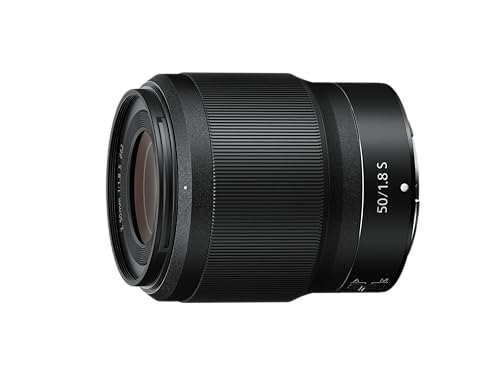
- ✓ Fast and sharp images
- ✓ Quiet, smooth autofocus
- ✓ Compact and lightweight
- ✕ Pricey for some
- ✕ No built-in image stabilization
| Focal Length | 50mm prime |
| Maximum Aperture | f/1.8 |
| Autofocus Motor | Ultra-quiet stepping motor |
| Optical Stabilization | 5-Axis Dual detect optical VR |
| Lens Mount Compatibility | Nikon Z mount; also compatible with F Mount via FTZ Mount Adapter |
| Lens Construction | Prime lens with high sharpness and minimal distortion |
There’s nothing more frustrating than missing the perfect golf swing shot because your camera lens just doesn’t keep up. I found myself constantly adjusting settings or dealing with sluggish focus, especially in tricky lighting conditions.
Then I tried the Nikon NIKKOR Z 50mm f/1.8 S lens, and everything changed. Its ultra-fast f/1.8 aperture gave me sharp images even in low light, which is a game-changer on cloudy days or early mornings on the course.
The focus is impressively quiet thanks to the new ultra-quiet stepping motor. No more distracting noise when capturing those critical moments or trying to be discreet around other players.
I also loved how compact and lightweight this lens is. It feels sturdy but won’t weigh down your camera bag, making it easy to carry around the course all day.
The image quality truly shines with razor-sharp details at 50mm. Plus, the virtually zero distortion and beautiful bokeh create stunning shots that highlight the swing or scenery perfectly.
Its five-axis optical VR really helps stabilize shots, even when I’m hand-holding in less-than-ideal conditions. The tilting Vari-angle LCD display is a bonus for tricky angles or quick shots.
If you want a versatile lens that handles low light, autofocus noise, and sharpness with ease, this Nikon is a solid pick for golf photography. It’s especially great for capturing those fleeting, perfect moments on the course.
JJC HB-N106 Lens Hood for Nikon 18-55mm AF-P DX VR Cameras

- ✓ Reduces lens flare
- ✓ Reversible for compact storage
- ✓ Protects from impacts
- ✕ Only fits specific lenses
- ✕ Not compatible with other models
| Material | High-quality ABS plastic |
| Compatibility | Nikon AF-P DX NIKKOR 18-55mm f/3.5-5.6G VR and Nikon AF-P DX NIKKOR 18-55mm f/3.5-5.6G lenses |
| Design | Reversible for compact storage |
| Function | Minimizes lens flare and ghosting by blocking stray light |
| Protection | Provides impact and weather resistance for the lens |
| Mounting Type | Bayonet mount compatible with specified Nikon lenses |
That shiny Nikon 18-55mm lens has been sitting in my bag, waiting for a good lens hood to prevent flare on those bright golf course days. When I finally got my hands on the JJC HB-N106, I was eager to see if it would live up to the hype.
I immediately noticed how sturdy and well-made it feels, thanks to the high-quality ABS material.
The reversible design is a real bonus, especially when I need to pack light. Flipping it around for storage takes just seconds and makes fitting it into my camera bag easier.
Mounting it onto my lens was straightforward, and it fit snugly without any wobbling. During bright sunlight shots, I saw a clear reduction in lens flare and ghosting, which really helped improve the contrast in my images.
It also provides solid protection against accidental bumps and scratches, which is a relief when you’re moving around a busy golf course. The hood’s design blocks stray light efficiently, and I appreciated how it keeps my lens safe from dust and rain in unpredictable weather.
It’s a simple accessory, but it makes a noticeable difference in image quality and lens safety.
One thing to keep in mind is that this hood only fits the specific AF-P DX NIKKOR 18-55mm f3.5-5.6G VR lens. If you have a different version, you’ll need a different hood.
Also, it’s very affordable at just $9.99, which makes it easy to add to your kit without breaking the bank.
Overall, it’s a practical, well-built addition that improves your shots and protects your gear. It’s not fancy, but it does exactly what you need during those sunny rounds on the course.
What Should You Know About Nikon Lenses for Golf Swing Photography?
To capture stunning golf swing photos, understanding the right Nikon lenses is essential:
- Telephoto Lenses: Ideal for capturing the action from a distance, telephoto lenses allow you to zoom in on the golfer without disturbing their performance.
- Wide-Angle Lenses: These lenses are great for capturing the entire scene, including the golfer and the surrounding environment, offering a dynamic perspective of the swing.
- Macro Lenses: If you want to focus on intricate details, such as the grip on the club or the golfer’s stance, macro lenses provide exceptional close-up shots.
- Fast Prime Lenses: With a wide aperture, fast prime lenses are perfect for low light conditions, enabling you to shoot at higher shutter speeds to freeze the action.
- Zoom Lenses: Versatile and practical, zoom lenses allow you to adjust the focal length quickly, making them suitable for various shots during a golf game.
Telephoto lenses typically range from 70mm to 300mm, offering excellent compression of the background, which helps to isolate the subject and create a blurred effect. This feature is particularly useful in sports photography, where capturing fast-moving subjects is crucial.
Wide-angle lenses, often starting around 24mm, provide a broader field of view, making them suitable for capturing the golfer’s full swing along with the surrounding landscape. This lens type enhances the storytelling aspect of your photographs, showcasing the environment in which the action occurs.
Macro lenses, such as the 105mm f/2.8, excel in capturing fine details, allowing photographers to focus on specific elements that convey the essence of the sport, like the texture of the golf ball or the golfer’s hand positioning on the club. These images can add a unique perspective to your photography portfolio.
Fast prime lenses, often available in 35mm or 50mm focal lengths, are favored for their ability to perform well in varying light conditions, making them ideal for dawn or dusk golfing sessions. Their wide apertures allow for increased light intake, which is essential for freezing a quick swing motion without motion blur.
Zoom lenses, such as 24-70mm or 70-200mm, provide flexibility for photographers who need to adapt to changing scenes and distances quickly. This adaptability is particularly advantageous in dynamic sports environments, where the action can shift rapidly, allowing for a variety of compositions without changing lenses.
How Do Different Nikon Lenses Impact Your Golf Swing Photography?
Choosing the right Nikon lens can significantly enhance your golf swing photography by providing clarity, depth, and the ability to capture the action effectively.
- Nikon AF-S NIKKOR 70-200mm f/2.8E FL ED VR: This lens is ideal for capturing the dynamic movements of golfers from a distance without sacrificing image quality.
- Nikon AF-S DX NIKKOR 35mm f/1.8G: A prime lens that offers excellent low-light performance and sharpness, perfect for capturing detailed shots of the golfer’s swing.
- Nikon AF-S NIKKOR 24-70mm f/2.8E ED VR: This versatile zoom lens allows for a range of framing options, making it suitable for both close-up and broader landscape shots on the golf course.
- Nikon AF-S NIKKOR 300mm f/4E PF ED VR: With its long focal length, this lens is perfect for isolating the golfer from the background, creating stunning portraits during their swing.
- Nikon 1 NIKKOR 10-30mm f/3.5-5.6 PD-ZOOM: A compact lens that is great for those who prefer lightweight gear and can be used for capturing action shots in a variety of settings.
The Nikon AF-S NIKKOR 70-200mm f/2.8E FL ED VR is a top choice for action shots, providing a fast aperture and image stabilization that helps freeze the motion of a swing while maintaining sharpness in the images.
The Nikon AF-S DX NIKKOR 35mm f/1.8G stands out due to its wide aperture, which is excellent for low-light conditions often found on golf courses during sunrise or sunset, ensuring you capture the details of the golfer’s technique.
The Nikon AF-S NIKKOR 24-70mm f/2.8E ED VR combines flexibility with quality; it enables you to quickly adjust your composition as the golfer moves, making it ideal for capturing both swinging action and the surrounding landscape.
The Nikon AF-S NIKKOR 300mm f/4E PF ED VR is particularly useful for portrait-style shots; its long reach allows you to capture the golfer’s swing from a distance while beautifully blurring the background, emphasizing the subject.
Lastly, the Nikon 1 NIKKOR 10-30mm f/3.5-5.6 PD-ZOOM is perfect for those looking to travel light and still want to get quality shots; its compact size makes it easy to carry around the course while still allowing for a wide range of shot compositions.
Why Is Aperture Significant for Capturing Golf Swings?
Aperture is significant for capturing golf swings because it directly influences the depth of field and the amount of light entering the lens, which are critical for achieving sharp and well-exposed images of fast-moving subjects.
According to a study by the American Society of Media Photographers, a wider aperture (lower f-stop number) allows for faster shutter speeds, which is essential for freezing the action of a golf swing. This is particularly important in sports photography, where precision is key to capturing the peak moments of an athlete’s performance.
The underlying mechanism involves the interaction between aperture, shutter speed, and ISO settings. A wider aperture reduces the depth of field, which can help isolate the golfer from the background, making the subject stand out. Furthermore, in bright outdoor conditions typical of golf courses, a wider aperture enables photographers to use faster shutter speeds without overexposing the image, thus ensuring that the dynamic motion of the swing is captured crisply and clearly.
Moreover, using the best Nikon lens for golf swing, which often features a fast maximum aperture, allows photographers to achieve optimal focus on the golfer while blurring the distractions in the background. This not only enhances the visual appeal of the shot but also emphasizes the golfer’s technique and form, which are crucial for analysis and improvement in the sport.
How Does Focal Length Affect the Outcome of Golf Swing Photos?
The focal length of a lens significantly influences the composition, perspective, and clarity of golf swing photos.
- Wide-angle lenses: These lenses typically have a focal length of 24mm to 35mm and are great for capturing the entire scene, including the golfer and the surrounding environment.
- Standard lenses: With a focal length around 50mm, these lenses provide a natural perspective, making them suitable for balanced compositions of the golfer in action without distortion.
- Telephoto lenses: Ranging from 70mm to 300mm, telephoto lenses allow you to zoom in on the golfer, capturing intricate details of the swing while compressing the background for a cleaner look.
- Macro lenses: Although primarily used for close-up photography, macro lenses can help capture specific details of the golf swing, such as the grip on the club or the ball’s position at impact.
Wide-angle lenses excel in providing context, making them ideal for shots that also include the course scenery, but they may introduce distortion at the edges that can affect the golfer’s portrayal.
Standard lenses are favored for their versatility and ability to mimic the human eye, producing images that feel natural and relatable, often resulting in stunning portraits of the golfer mid-swing.
Telephoto lenses are particularly effective for isolating the golfer from the background, allowing photographers to capture the power and technique of the swing without distractions, though they require more space to operate effectively.
Macro lenses serve a niche purpose in golf photography, focusing on the finer details that can enhance storytelling, but they are not typically used for full-swing shots due to their very limited field of view.
What Key Features Should Be Considered When Choosing a Nikon Lens for Golf?
When selecting the best Nikon lens for capturing your golf swing, several key features should be considered to ensure optimal performance and image quality.
- Focal Length: The focal length determines how close or far away the subject can be captured. For golf swings, a lens with a focal length between 70mm to 200mm is ideal, as it allows for good framing of the golfer while maintaining a comfortable distance to avoid interference.
- Aperture Size: A lens with a wide aperture (like f/2.8 or f/4) is beneficial for creating a shallow depth of field, which helps blur the background and keep the focus on the golfer. This feature is particularly useful in bright daylight conditions, allowing for faster shutter speeds to freeze the action.
- Image Stabilization: Lenses equipped with image stabilization (IS) help reduce blurriness caused by camera shake, which is crucial when shooting at longer focal lengths. This is especially important for dynamic sports like golf, where the action can be fast-paced, and stability is key for clear shots.
- Autofocus Speed: Fast and accurate autofocus is essential for capturing the quick movements of a golfer’s swing. Look for lenses with advanced autofocus systems that can lock onto the subject quickly and track them smoothly throughout their swing.
- Weather Sealing: Golf is often played in varying weather conditions, so a lens with weather-sealed construction can offer protection against moisture and dust. This durability ensures the lens can withstand the elements, allowing for uninterrupted shooting during a round of golf.
- Weight and Size: A lightweight and compact lens is easier to handle and carry around the golf course. Opt for a lens that balances portability with performance, as this will allow you to capture the perfect shot without being burdened by heavy equipment.
- Compatibility with Camera Body: Ensure that the lens is fully compatible with your Nikon camera body, particularly regarding autofocus and metering capabilities. Some lenses are optimized for specific camera models, which can enhance overall performance and image quality.
Which Nikon Lenses Are Ideal for Capturing Dynamic Golf Swings?
The best Nikon lenses for capturing dynamic golf swings offer fast autofocus, excellent image quality, and a suitable focal length for action shots.
- Nikon AF-S NIKKOR 70-200mm f/2.8E FL ED VR: This lens is a favorite among sports photographers for its versatility and speed.
- Nikon AF-S NIKKOR 300mm f/2.8G ED VR II: With its long reach and wide aperture, this lens excels in capturing detailed action shots from a distance.
- Nikon AF-S NIKKOR 24-70mm f/2.8E ED VR: This standard zoom lens is perfect for golfers who want flexibility in framing their shots, whether from the sidelines or on the course.
- Nikon AF-S NIKKOR 85mm f/1.4G: Known for its exceptional sharpness and beautiful bokeh, this lens is ideal for close-up shots of players and their swings.
- Nikon AF-P NIKKOR 70-300mm f/4.5-5.6E ED VR: A more budget-friendly option, this lens offers a good zoom range and image stabilization for capturing fast-moving subjects.
Nikon AF-S NIKKOR 70-200mm f/2.8E FL ED VR: This lens features a fast f/2.8 aperture, which allows for excellent low-light performance and shallow depth of field. Its advanced vibration reduction (VR) system helps to stabilize the image, making it easier to capture sharp photos of golf swings even at slower shutter speeds.
Nikon AF-S NIKKOR 300mm f/2.8G ED VR II: This prime lens is designed for professional sports photography, providing outstanding image quality and a fast f/2.8 aperture. Its longer focal length is particularly useful for capturing players from a distance without sacrificing detail, making it an excellent choice for golf tournaments.
Nikon AF-S NIKKOR 24-70mm f/2.8E ED VR: This lens offers a versatile zoom range suitable for various compositions, from wide-angle views of the golf course to tighter shots of the player during their swing. The constant f/2.8 aperture ensures consistent exposure throughout the zoom range, making it reliable for capturing dynamic movements.
Nikon AF-S NIKKOR 85mm f/1.4G: Renowned for its beautiful bokeh and sharpness, this lens is perfect for isolating the subject during a swing. The wide f/1.4 aperture allows for excellent low-light performance and can create stunning portraits of golfers as they prepare for their shots.
Nikon AF-P NIKKOR 70-300mm f/4.5-5.6E ED VR: This lens provides an impressive zoom range at a more affordable price, making it accessible for amateur photographers. It features vibration reduction technology that helps to keep images sharp, especially when capturing fast-paced golf swings from the sidelines.
How Can You Adjust Your Nikon Camera Settings for Optimal Golf Swing Photography?
To capture the perfect golf swing shot using your Nikon camera, adjusting the settings is crucial. Start with the following adjustments:
-
Shutter Speed: Set your shutter speed to at least 1/1000 seconds to freeze the motion of the golf swing. A faster shutter speed minimizes motion blur, providing sharp images.
-
Aperture: A larger aperture (lower f-number, like f/2.8 or f/4) allows more light and creates a shallow depth of field. This helps focus on the golfer while softly blurring the background, emphasizing their form.
-
ISO: If you’re shooting in bright daylight, an ISO of 100-400 is optimal. In lower light, gradually increase the ISO while being mindful of graininess. Aim for a balance where your images remain clear.
-
Focus Mode: Use Continuous Auto Focus (AF-C) for tracking the golfer’s movement. This setting helps maintain focus on the subject as they swing.
-
Shooting Mode: Burst mode is advantageous for capturing a series of frames in quick succession, ensuring you don’t miss the peak of the swing.
Making these adjustments enhances your ability to capture striking images of golfers mid-swing, showcasing the elegance and power of the sport.
Related Post: